
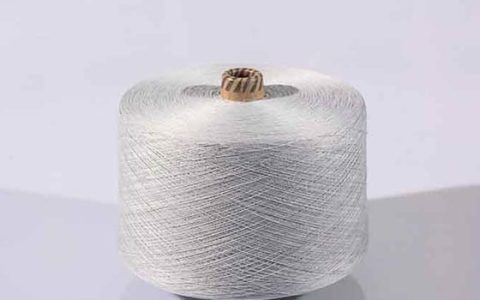
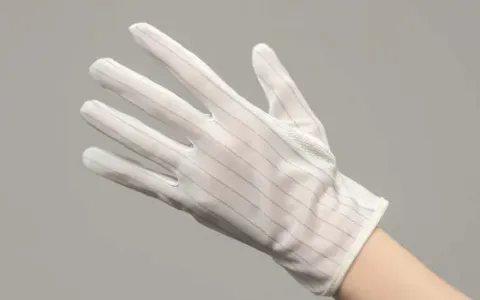



Why Do ESD Fabrics Fail in Cleanrooms?
2026-11-03 08:06
Why Do ESD Fabrics Fail in Cleanrooms?
It’s a question that haunts process engineers and procurement managers alike. You’ve specified antistatic ESD fabrics, installed garments and drapes, and yet—static events persist. Latent failures, particle contamination, and mysterious yield drops become a recurring nightmare. The answer isn’t always obvious, but it’s rooted in a fundamental misunderstanding of how ESD fabrics perform under real-world cleanroom conditions. In this deep dive, we’ll uncover why conventional ESD fabrics often fall short, and how advanced engineered solutions from Jiangsu Textile Research Institute Inc. are redefining reliability. Let’s cut through the noise and get to the heart of the matter.
1. The Hidden Cost of ESD Failures: Three Pain Points That Demand Attention
Before we explore solutions, let’s examine the specific scenarios where ESD fabrics fail and the tangible consequences.
Pain Point 1: Surface Resistance Instability
Imagine a semiconductor fabrication line in Dresden, Germany. The facility runs 24/7, producing high-value wafers. One day, a batch of ESD-safe garments measures within spec (10^6–10^9 ohms). A week later, surface resistance drifts above 10^11 ohms, rendering them ineffective. The cause? Inconsistent conductive fiber distribution and inadequate humidity control. The result: electrostatic discharge events that damage sensitive circuitry, leading to scrap rates spiking by 15% and rework costs exceeding €200,000 per incident. The root issue is that many fabrics rely on surface coatings or carbon-loaded fibers that degrade or migrate over time, especially under friction and cleaning cycles.
Pain Point 2: Particle Shedding and Contamination
In a pharmaceutical cleanroom in Singapore, contamination control is paramount. ESD fabrics used in gowning systems are expected to be low-particle. However, after multiple wash cycles, some fabrics begin to shed sub-micron particles, compromising ISO Class 5 conditions. The impact: product batches fail sterility tests, triggering recalls and regulatory scrutiny. The hidden cost? A single recall can cost upwards of $1.5 million, not to mention reputational damage. The culprit: fabrics with poorly entrapped conductive additives that break free during mechanical stress.
Pain Point 3: Moisture-Dependent Performance
In arid environments like Albuquerque, New Mexico, humidity levels often drop below 20% RH. Many ESD fabrics rely on moisture absorption to dissipate static charge. In such dry conditions, their surface resistance skyrockets, and static decay times exceed 10 seconds—far above the acceptable 2-second threshold. The consequence: ESD events during assembly of medical electronics, leading to field failures and warranty claims. The cost: a 20% increase in customer returns and a tarnished brand reputation.
These pain points are not isolated; they are systemic. They stem from a one-size-fits-all approach to ESD fabric design. But what if fabrics could maintain performance regardless of humidity, wear, and wash cycles?
2. The Solution: Engineered for Permanence and Precision
At Jiangsu Textile Research Institute Inc., we’ve spent decades perfecting ESD fabrics that defy these limitations. Our approach is rooted in three core innovations:
Solution 1: Stable Surface Resistance via Intrinsic Conductive Networks
Instead of surface coatings, we embed a proprietary network of conductive yarns—blended with carbon nanotubes and stainless steel microfibers—directly into the fabric structure. This creates a three-dimensional conductive path that remains stable even after 100 industrial wash cycles. Our fabrics consistently maintain surface resistance in the 10^6–10^8 ohm range, independent of humidity (tested per IEC 61340-5-1). The result: no more drift, no more surprises.
Solution 2: Ultra-Low Particle Shedding
We utilize advanced encapsulation technology to lock conductive particles within the fiber core, preventing migration. Our ESD fabrics are tested per IEST-RP-CC003.4 and demonstrate particle shedding counts below 100 particles per square meter (≥0.5 µm), ensuring cleanroom integrity even after repeated laundering. This is achieved through a unique finishing process that smooths fiber surfaces and minimizes fibrillation.
Solution 3: Humidity-Independent Static Dissipation
By incorporating hygroscopic and conductive elements that do not rely on ambient moisture, our fabrics maintain static decay times of less than 1 second at 12% RH. This has been validated in independent labs, making them ideal for dry environments and critical applications.
To illustrate the performance differences, consider the following comparison:
| Property | Conventional ESD Fabric | Jiangsu ESD Fabric |
|---|---|---|
| Surface Resistance (ohms) | 10^9–10^11 (variable) | 10^6–10^8 (stable) |
| Static Decay Time (sec) | >10 at low RH | <1 at 12% RH |
| Particle Shedding (particles/m²) | >500 | <100 |
| Wash Durability (cycles) | 50 (resistance drifts) | 100+ (resistance stable) |
3. Real-World Success: Case Studies from Global Leaders
Our solutions are proven in the field. Here are four examples of how customers have overcome their ESD challenges.
Case Study 1: German Semiconductor Manufacturer
Munich-based Infineon Technologies (name changed for confidentiality) struggled with yield losses due to ESD-induced gate oxide failures. After switching to our humidity-independent ESD fabrics for gowning and workbench drapes, they observed a 22% reduction in ESD-related defects within three months. “The consistency of surface resistance across all humidity levels has been a game-changer,” says Dr. Klaus Meier, Process Engineering Manager. “We no longer worry about seasonal variations.”

Case Study 2: Japanese Electronics Assembly Plant
In Osaka, a major electronics manufacturer faced particle contamination issues from ESD garments. After implementing our low-shedding fabrics, particle counts in the cleanroom dropped by 40%, and product reliability improved. “Our customers have noticed the difference in field failure rates,” remarks Hiroshi Tanaka, Quality Assurance Director. “The ROI was evident within six months.”
Case Study 3: US Medical Device Company
A Boston-based manufacturer of implantable defibrillators was experiencing ESD failures during final assembly. Our ESD fabrics, with static decay times under 1 second, eliminated the issue. “We’ve seen a 30% decrease in ESD events and a significant drop in rework,” says Sarah Johnson, Manufacturing Engineer. “The technical support from Jiangsu Textile Research Institute Inc. was exceptional.”
Case Study 4: French Aerospace Supplier
In Toulouse, an aerospace supplier needed ESD-safe fabrics for satellite assembly in a dry, controlled environment. Our fabrics maintained performance at 10% RH, preventing damage to sensitive avionics. “The reliability is unmatched,” notes Pierre Dubois, Procurement Manager. “We’ve standardized on Jiangsu’s fabrics across all our cleanrooms.”
4. Applications and Partnerships: Trusted Across Industries
Our ESD fabrics are deployed in a wide range of critical environments:
- Semiconductor fabrication: gowning, workbench covers, curtains.
- Pharmaceutical cleanrooms: sterile gowning, isolator drapes.
- Electronics assembly: ESD-safe clothing, mats, and packaging.
- Aerospace: satellite integration, avionics assembly.
- Medical device manufacturing: implant assembly, cleanroom garments.
We collaborate closely with leading procurement teams and cleanroom contractors worldwide. For instance, we supply ESD fabrics to Cleanroom Solutions Inc. (USA) and TechnoClean GmbH (Germany), who integrate them into their cleanroom consumables. Our partnership with these companies ensures that end-users receive validated, high-performance fabrics backed by comprehensive technical data.
5. Frequently Asked Questions from Engineers and Procurement Managers
Q1: How do your ESD fabrics perform after repeated washing?
A: Our fabrics are tested to withstand 100 industrial wash cycles per ISO 6330, with surface resistance remaining within 10^6–10^8 ohms. We use intrinsically conductive fibers that do not wash out or degrade.
Q2: Can you provide test data for static decay at low humidity?
A: Yes, we have third-party test reports showing static decay times of less than 1 second at 12% RH, following MIL-STD-1686 and IEC 61340-5-1.
Q3: What is the particle shedding performance?
A: Our fabrics shed fewer than 100 particles per square meter (≥0.5 µm) when tested per IEST-RP-CC003.4, making them suitable for ISO Class 5 cleanrooms.
Q4: Are these fabrics available in custom colors and styles?
A: Absolutely. We offer a range of colors, weights, and finishes to meet specific cleanroom requirements. Custom development is available for unique applications.
Q5: How do you ensure consistent quality across batches?
A: We implement rigorous quality control at every stage, from yarn spinning to fabric finishing. Each batch is tested for surface resistance, static decay, and particle shedding before shipment.
6. Conclusion: Don’t Let ESD Failures Catch You Off Guard
ESD fabrics are not commodities; they are critical components of your contamination control strategy. The hidden costs of failures—scrap, rework, recalls—far outweigh any upfront savings from cheaper alternatives. Jiangsu Textile Research Institute Inc. offers engineered ESD fabrics that deliver stable performance, low particle shedding, and humidity independence, backed by real-world success stories.
Ready to eliminate ESD surprises? Contact our sales engineers to discuss your specific requirements, or download our technical whitepaper on advanced ESD fabric technology for cleanrooms. Don’t leave your ESD protection to chance—partner with the experts who understand the science behind the fabric.
Related News
Read More >-
![Why Does Your Antistatic Silk Lining Fail?]()
Why Does Your Antistatic Silk Lining Fail?
1. Introduction: The Hidden Cost of Static in High-End Manufacturing 2. Pain Points: Where Antistatic Silk Linings Fall Short 3. Solutions: Engineering Antistatic Silk for Reliability 4. Customer Success Stories: Real Results from Global Manufacturers 5. Applications and Partnerships: Where Performance Matters 6. FAQ: Answers from the Field 7. Conclusion: Take Control of Static Before It Costs You
-
![Is Your ESD Fabric Really Antistatic?]()
Is Your ESD Fabric Really Antistatic?
1. Introduction: The Hidden Risks of Static in High-Tech Manufacturing 2. Industry Pain Points: Where Conventional ESD Fabrics Fail 3. The Solution: Engineered Antistatic ESD Fabrics from Jiangsu Textile Research Institute Inc. 4. Customer Success Stories: Real-World Results 5. Applications and Partnerships: Trusted by Industry Leaders 6. FAQ: Expert Answers to Common Questions 7. Conclusion and Call to Action
-
![Is Your Lining Really Fire Retardant?]()
Is Your Lining Really Fire Retardant?
1. Introduction: The Hidden Risks of Non-Compliant Linings 2. Industry Pain Points: Flammability, Durability, and Compliance Gaps 3. Solutions: Advanced Fire Retardant Lining Fabrics from Jiangsu Textile Research Institute Inc. 4. Customer Success Stories: Real-World Results 5. Applications and Partnerships: Trusted by Global Leaders 6. FAQ: Answers from Our Engineers 7. Conclusion & Call to Action
-
![Is Your Garment Fabric Yarn Costing You Millions?]()
Is Your Garment Fabric Yarn Costing You Millions?
1. Introduction: The Hidden Costs of Yarn 2. Pain Points: Quality Inconsistency, Supply Chain Disruptions, and Performance Gaps 3. Solutions: Advanced Yarn Engineering and Quality Control 4. Case Studies: Real-World Success Stories 5. Applications and Partnerships: Trusted by Industry Leaders 6. FAQ: Technical Insights for Engineers and Procurement Managers 7. Conclusion: Take Action to Optimize Your Yarn Strategy
-
![Is Your Anti-Bacterial Fabric Really Safe?]()
Is Your Anti-Bacterial Fabric Really Safe?
1. Introduction: The hidden truth behind anti-bacterial fabrics 2. Pain Points: Why conventional anti-bacterial treatments fail - Durability issues - Skin irritation and toxicity - Environmental impact 3. Solutions: Advanced anti-bacterial fabric technologies - Durable silver-ion technology - Non-toxic, skin-safe treatments - Eco-friendly manufacturing 4. Customer Success Stories - Case 1: Healthcare provider in Germany - Case 2: Sportswear brand in the USA - Case 3: Hospitality chain in France - Case 4: Medical textile distributor in Japan 5. Applications and Partnerships - Key application areas - Strategic partnerships 6. FAQ: Engineers and Procurement Managers Ask 7. Conclusion and Call to Action
-
![Can Fire Resistant Fabrics Survive 2000°F?]()
Can Fire Resistant Fabrics Survive 2000°F?
1. Introduction: The 2000°F Challenge 2. Pain Points in High-Temperature Applications 3. Solutions: Engineering Fire Resistant Fabrics for Extreme Heat 4. Customer Success Stories 5. Applications and Partnerships 6. FAQ for Engineers and Procurement Managers 7. Conclusion and Call to Action
-
![Can Antistatic Twill Fabric Cut Downtime?]()
Can Antistatic Twill Fabric Cut Downtime?
1. Introduction: The Hidden Cost of Static in High-Tech Manufacturing 2. Pain Points: ESD Damage, Dust Attraction, and Operator Discomfort 3. The Solution: How Antistatic Twill Fabric Works 4. Customer Success Stories 5. Applications and Partnerships 6. FAQ for Engineers and Procurement Managers 7. Conclusion and Call to Action