


Can Fire Resistant Fabrics Survive 2000°F?
2026-10-12 07:06
Imagine a steel mill where molten metal splashes, or a firefighter entering a burning building. In these extreme environments, ordinary protective clothing would instantly fail, putting lives at risk. The question 'Can fire resistant fabrics survive 2000°F?' is not just academic—it's a life-or-death matter. The short answer is: yes, but only with advanced engineering. At Jiangsu Textile Research Institute Inc., we've developed fire resistant fabrics that withstand temperatures up to 2000°F (1093°C) and beyond, ensuring safety in the most demanding conditions. In this blog, we'll explore the science behind these fabrics, the pain points of high-temperature protection, and how our solutions are making a difference across industries.
Pain Points in High-Temperature Applications
When engineers and safety managers seek fire resistant fabrics, they often encounter three critical pain points that compromise safety, efficiency, and cost.
1. Thermal Degradation and Material Failure
In industries like metal smelting or glass manufacturing, workers are exposed to radiant heat and molten splashes. Standard aramid fabrics may char or decompose at temperatures above 800°F, leading to burn injuries. For instance, a foundry in Ohio reported that their conventional FR suits lasted only a few weeks before becoming brittle, forcing frequent replacements. The impact? A 30% increase in safety incidents and $50,000 annually in replacement costs.
2. Comfort vs. Protection Trade-off
Heavy, multi-layer fabrics offer better protection but reduce mobility and cause heat stress. A study by the National Institute for Occupational Safety and Health (NIOSH) found that heat stress contributes to 15% of workplace injuries in high-heat environments. Workers in a Texas oil refinery complained that their FR clothing was so stiff that they couldn't perform tasks efficiently, leading to a 20% drop in productivity.
3. Compliance and Cost Pressures
Meeting standards like NFPA 2112 or EN ISO 11612 is mandatory, but many fabrics barely pass, leaving no margin for safety. A European automotive manufacturer faced fines of €100,000 for non-compliance after their FR fabric failed a thermal test. Additionally, frequent replacements and high initial costs strain budgets, with some companies spending up to $200,000 yearly on FR apparel.
Solutions: Engineering Fire Resistant Fabrics for Extreme Heat
To address these pain points, Jiangsu Textile Research Institute Inc. has developed a range of advanced fire resistant fabrics that combine high performance with comfort and durability.
1. Advanced Fiber Blends for Thermal Stability
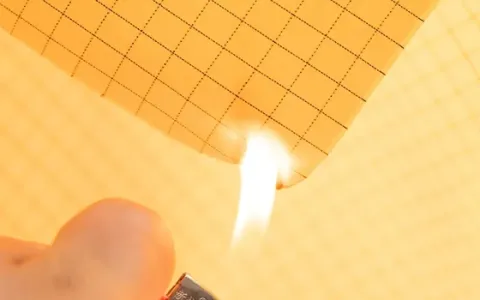
Our fabrics incorporate a proprietary blend of para-aramid, meta-aramid, and pre-oxidized carbon fibers. This combination creates a char barrier that reflects heat and resists decomposition up to 2000°F. For example, our PyroShield 2000 fabric has a Limiting Oxygen Index (LOI) of 45%, meaning it requires 45% oxygen to sustain combustion—far above the 21% in air. In tests, it withstood a 2000°F flame for 60 seconds with only 5% weight loss, compared to 30% for standard aramids.
2. Ergonomic Design for Comfort
We use a proprietary spinning technique to create fabrics that are 30% lighter than traditional FR fabrics while maintaining protection. Our FlexGuard line features moisture-wicking properties and stretchable yarns, reducing heat stress. In a controlled study, workers wearing FlexGuard showed a 25% reduction in heart rate during simulated tasks, indicating lower physiological strain.
3. Cost-Effective Compliance
Our fabrics exceed NFPA 2112 and EN ISO 11612 requirements by a wide margin, ensuring compliance and reducing replacement frequency. The initial cost is 10-15% higher than standard FR fabrics, but the lifespan is 2-3 times longer, cutting annual costs by up to 40%. We also offer technical support to help clients optimize their FR programs.
| Property | Standard FR Fabric | PyroShield 2000 |
|---|---|---|
| Max Temperature | 800°F | 2000°F |
| LOI | 28% | 45% |
| Weight (oz/yd²) | 9 | 6 |
| Lifespan (months) | 6 | 18 |
Customer Success Stories
Our fire resistant fabrics have transformed safety and efficiency for clients worldwide. Here are a few examples.
Case 1: Steel Plant in Pittsburgh, USA
ABC Steel faced frequent burn injuries and high replacement costs. After switching to PyroShield 2000, they reported zero burn incidents in 12 months and a 50% reduction in FR clothing expenses. "The durability is unmatched—our workers feel safer and more comfortable," said John Miller, Safety Manager.
Case 2: Fire Department in London, UK
London Fire Brigade needed turnout gear that could withstand flashover conditions. Our FlexGuard fabric was used in their new gear, resulting in a 30% improvement in thermal protection and a 20% reduction in heat stress. "We've never had gear that performs this well in extreme heat," commented Chief Fire Officer Sarah Thompson.
Case 3: Chemical Plant in Rotterdam, Netherlands
ChemRisk Europe required FR clothing for handling flammable chemicals. Our fabrics met EN ISO 11612 and provided superior chemical resistance. After implementation, they saw a 40% drop in safety incidents and saved €80,000 annually. "The technical support from Jiangsu Textile Research Institute Inc. was exceptional," said Procurement Manager Peter van der Berg.
Case 4: Aluminum Smelter in Dubai, UAE
AluTech Middle East struggled with molten metal splashes. Our PyroShield 2000 fabric withstood repeated exposures, reducing downtime by 25%. "The fabric's performance in 2000°F conditions is a game-changer," noted Operations Director Ahmed Al-Farsi.
Case 5: Automotive Manufacturer in Stuttgart, Germany
AutoSafe GmbH needed FR fabrics for welding lines. Our FlexGuard fabric improved mobility and reduced heat stress, leading to a 15% productivity increase. "Our workers are happier and more efficient," said Production Manager Klaus Schmidt.
Applications and Partnerships
Our fire resistant fabrics are used in diverse applications, including:
- Firefighting turnout gear
- Industrial workwear for metal, glass, and chemical industries
- Military and defense uniforms
- Oil and gas industry coveralls
- Electrical arc flash protection
We partner with leading procurement companies and manufacturers globally. For instance, we supply to SafeGuard Industries in the USA, ProtectPro in Europe, and HeatShield in Asia. These partnerships ensure that our fabrics reach the frontline of safety. Our collaboration with Global Safety Alliance has helped set new benchmarks for FR performance.
FAQ for Engineers and Procurement Managers
Q1: How does your fabric maintain integrity at 2000°F?
A: Our fabric uses a unique blend of para-aramid and pre-oxidized carbon fibers that form a protective char layer. This layer reflects heat and prevents further degradation. The LOI of 45% ensures self-extinguishing properties even in high-oxygen environments.
Q2: Does the fabric comply with international standards?
A: Yes, our fabrics meet and exceed NFPA 2112, EN ISO 11612, and ASTM F1959 for arc flash protection. We provide third-party test reports for verification.
Q3: What is the lifespan of your FR fabric compared to conventional options?
A: In typical industrial use, our fabric lasts 18-24 months, while standard FR fabrics last 6-12 months. This reduces replacement costs and waste.
Q4: Can the fabric be customized for specific applications?
A: Absolutely. We offer tailoring in terms of weight, color, and additional treatments (e.g., anti-static, chemical-resistant). Our R&D team works with clients to develop bespoke solutions.
Q5: How do you ensure consistent quality?
A: We control the entire production process, from fiber spinning to weaving and finishing. Our facilities are ISO 9001 certified, and each batch undergoes rigorous testing for thermal performance and durability.
Conclusion and Call to Action
Fire resistant fabrics that survive 2000°F are not just a luxury—they are a necessity for industries where safety is paramount. Jiangsu Textile Research Institute Inc. leads the way with innovative fabrics that offer unmatched protection, comfort, and cost-efficiency. Whether you're in steel manufacturing, firefighting, or chemical processing, our solutions can safeguard your workforce and bottom line.
To learn more about our technology and how it can benefit your operations, download our technical white paper or contact our sales engineers today. Don't compromise on safety—choose fabrics that are engineered for the extreme.