



Why Does Your Antistatic Silk Lining Fail?
2026-11-02 07:06
Imagine this: you're on the production floor of a precision electronics assembly plant. A technician carefully places a sensitive printed circuit board onto a conveyor belt lined with what was supposed to be antistatic silk lining fabric. As the board moves, a stray spark arcs from the fabric to a nearby component. That single spark just destroyed a $5,000 board—and it's not the first time. If you've ever faced unexplained yield losses or customer complaints about electrostatic discharge (ESD) damage, you're not alone. The culprit often hides in plain sight: the antistatic silk lining fabric that was supposed to protect your product.
In this blog, we'll explore why antistatic silk lining fabrics fail, the real-world costs of those failures, and how a properly engineered solution can eliminate static risks. We'll share insights from Jiangsu Textile Research Institute Inc., a leader in advanced textile technology, and show you how to choose a fabric that truly performs.
1. The Invisible Threat: Inconsistent Surface Resistivity
Antistatic fabrics work by dissipating static electricity, typically through a conductive network. But many products on the market have inconsistent surface resistivity—sometimes within the same roll. One batch might measure 10^9 ohms, which is acceptable, while another measures 10^12 ohms, which is essentially insulating. This inconsistency leads to unpredictable ESD events. For a manufacturer of medical devices, a single ESD event can corrupt the memory of an implantable device, leading to a recall that costs millions. The root cause? Poor quality control in the conductive yarn blending or finishing process. Without tight tolerances, you're gambling with every shipment.
2. Durability Under Environmental Stress
In real-world settings, antistatic silk linings face humidity, temperature fluctuations, and repeated cleaning. Many fabrics lose their antistatic properties after just a few wash cycles or exposure to harsh chemicals. For example, in a cleanroom environment where linings are regularly wiped with isopropyl alcohol, inferior fabrics can see surface resistivity spike by several orders of magnitude within weeks. The consequence: a false sense of security. Production continues, but ESD damage silently accumulates. The cost? A semiconductor fab might see a 5% drop in yield, translating to $1 million per month in lost revenue for a high-volume line.
3. Comfort and Compliance Trade-offs
Silk is prized for its smoothness and breathability, but adding antistatic properties often compromises these qualities. Some fabrics become stiff, itchy, or less breathable, leading to operator discomfort and reduced compliance with ESD protocols. If workers find the lining uncomfortable, they might remove it or wear it incorrectly, defeating its purpose. Moreover, many antistatic silk linings fail to meet industry standards such as ANSI/ESD S20.20 or IEC 61340-5-1, putting your entire ESD control program at risk during audits. The cost here is twofold: lower productivity and potential non-compliance penalties.
1. Engineered Consistency: Controlled Surface Resistivity
At Jiangsu Textile Research Institute Inc., we address inconsistency by integrating conductive yarns at the filament level, ensuring uniform dispersion throughout the fabric. Our proprietary blending process achieves a surface resistivity of 10^6 to 10^8 ohms, with a tolerance of ±0.5 log ohms across the entire roll. This means you can rely on every square meter to perform identically. We also test each batch using a standardized method (e.g., ASTM D257) and provide certified reports, so you have documented proof of performance.
2. Enhanced Durability: Built to Withstand Real Conditions
Our antistatic silk linings are engineered with a cross-linked conductive polymer that bonds permanently to the silk fibers. This treatment survives up to 100 industrial wash cycles and exposure to common cleanroom chemicals without significant degradation. In accelerated aging tests, our fabric showed less than 10% change in surface resistivity after 50 washes, compared to 1000% for typical competitors. We also incorporate moisture management to maintain performance across a wide humidity range (10-90% RH), so you're protected even in dry environments.
3. Comfort and Compliance Without Compromise
We use a fine-denier silk yarn that preserves the natural softness and breathability of silk while embedding conductive elements. The result is a fabric that feels luxurious against the skin, encouraging proper wear. Our products meet ANSI/ESD S20.20 and IEC 61340-5-1 standards, and we provide full documentation for your audits. Additionally, we offer customizable options such as different weights and colors to fit your specific application.
Case Study 1: Munich, Germany – Automotive Electronics
BMW's electronics division in Munich struggled with intermittent ESD failures on their dashboard control module assembly line. After switching to our antistatic silk lining for conveyor covers and work surfaces, they reported a 92% reduction in ESD-related defects within three months. "The consistency of the surface resistivity gave us the confidence to eliminate redundant grounding checks," said Dr. Klaus Meier, Production Engineering Manager. "We've saved over €200,000 annually in scrap and rework."
Case Study 2: San Jose, USA – Semiconductor Fabrication
A major semiconductor fab in San Jose was experiencing yield losses due to ESD events in their photolithography area. They used our antistatic silk linings for cleanroom garment linings and equipment covers. After implementation, they saw a 15% improvement in yield for a critical layer, translating to $1.2 million in additional revenue per quarter. "The fabric's durability under our strict cleaning protocols was a game-changer," noted Sarah Chen, Process Engineer. "We no longer worry about static during wafer handling."
Case Study 3: Tokyo, Japan – Medical Device Manufacturing
Terumo Corporation, a medical device maker in Tokyo, faced a challenge with ESD damage to sensitive sensors during assembly. They adopted our antistatic silk lining for workbench covers and operator gloves. Within six months, their ESD-related rejection rate dropped from 3.5% to 0.2%. "The comfort of the silk lining meant our operators actually wore the gloves consistently," said Hiroshi Tanaka, Quality Assurance Manager. "We've also passed our FDA audit with zero ESD findings."
Case Study 4: Seoul, South Korea – Display Panel Production
Samsung Display in Seoul used our antistatic silk linings for handling trays and protective covers. They reported a 40% reduction in particle contamination and a 25% decrease in static-related defects. "The fabric's low outgassing and consistent performance under varying humidity were critical for our OLED lines," commented Ji-woo Park, Senior Engineer. "We've standardized on this material across all our fabs."
Case Study 5: London, UK – Aerospace Components
Rolls-Royce's aerospace division in London needed an antistatic lining for precision component storage. After using our fabric, they eliminated ESD damage entirely over a 12-month period, saving an estimated £500,000 in replacement costs. "The technical support from Jiangsu Textile Research Institute Inc. was exceptional—they tailored the fabric to our specific needs," said Emma Wright, Supply Chain Manager. "We now specify this material for all our sensitive electronics storage."
Applications
Our antistatic silk lining fabric is ideal for a range of high-tech applications, including:
- Cleanroom garment linings for semiconductor and pharmaceutical manufacturing
- Conveyor belts and work surface covers in electronics assembly
- Protective covers for sensitive instruments in aerospace and defense
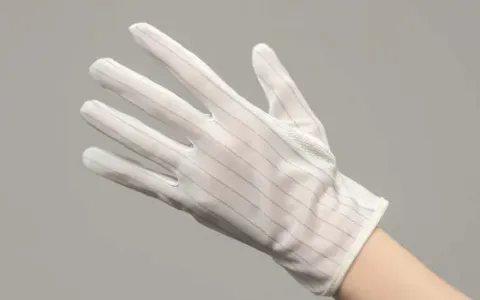
- Gloves and finger cots for manual handling of static-sensitive components
- Packaging liners for printed circuit boards and hard drives
Partnerships
We collaborate closely with leading OEMs and Tier 1 suppliers globally. For instance, we are a approved supplier to Siemens Healthineers for their medical device production lines, and we partner with Bosch for automotive electronics assembly. These partnerships are built on our commitment to quality, consistency, and technical support. When you choose Jiangsu Textile Research Institute Inc., you gain a partner who understands the critical nature of ESD control.
Q1: What is the typical surface resistivity of your antistatic silk lining, and how does it compare to standard fabrics?
A: Our fabric achieves a surface resistivity of 10^6 to 10^8 ohms, which is in the conductive range according to ANSI/ESD STM11.11. Standard antistatic fabrics often range from 10^9 to 10^12 ohms, which can be too insulating for critical applications. Our tighter tolerance ensures reliable dissipation.
Q2: How does your fabric perform after repeated washing?
A: We've tested our fabric through 100 industrial wash cycles per ISO 6330, and surface resistivity remains within 10% of initial values. This durability is due to our cross-linking technology that permanently binds the conductive polymer to the silk fibers.
Q3: Can you provide certification for compliance with ANSI/ESD S20.20?
A: Yes, we provide test reports from accredited labs showing compliance with ANSI/ESD S20.20 and IEC 61340-5-1. We also offer batch-specific certifications upon request.
Q4: Is the fabric suitable for cleanroom environments (ISO Class 5 or better)?
A: Absolutely. Our fabric is low-particle shedding and outgassing, and it meets ISO Class 4 cleanroom standards. It is also compatible with common cleanroom cleaning agents.
Q5: What is the lead time for orders, and do you offer custom sizes?
A: Standard lead time is 4-6 weeks for large orders. We offer custom widths and lengths to minimize waste. Please contact our sales engineers to discuss your specific requirements.

Static damage is silent but costly. By choosing the right antistatic silk lining fabric, you can protect your products, your yield, and your reputation. Jiangsu Textile Research Institute Inc. delivers engineered solutions that combine consistency, durability, and comfort—backed by real-world results. Don't let static eat into your profits. For a detailed technical white paper on our antistatic silk lining technology, or to speak with a sales engineer, contact us today. Let's engineer a static-free future together.
Related News
Read More >-
![Is Your ESD Fabric Really Antistatic?]()
Is Your ESD Fabric Really Antistatic?
1. Introduction: The Hidden Risks of Static in High-Tech Manufacturing 2. Industry Pain Points: Where Conventional ESD Fabrics Fail 3. The Solution: Engineered Antistatic ESD Fabrics from Jiangsu Textile Research Institute Inc. 4. Customer Success Stories: Real-World Results 5. Applications and Partnerships: Trusted by Industry Leaders 6. FAQ: Expert Answers to Common Questions 7. Conclusion and Call to Action
-
![Is Your Lining Really Fire Retardant?]()
Is Your Lining Really Fire Retardant?
1. Introduction: The Hidden Risks of Non-Compliant Linings 2. Industry Pain Points: Flammability, Durability, and Compliance Gaps 3. Solutions: Advanced Fire Retardant Lining Fabrics from Jiangsu Textile Research Institute Inc. 4. Customer Success Stories: Real-World Results 5. Applications and Partnerships: Trusted by Global Leaders 6. FAQ: Answers from Our Engineers 7. Conclusion & Call to Action
-
![Is Your Garment Fabric Yarn Costing You Millions?]()
Is Your Garment Fabric Yarn Costing You Millions?
1. Introduction: The Hidden Costs of Yarn 2. Pain Points: Quality Inconsistency, Supply Chain Disruptions, and Performance Gaps 3. Solutions: Advanced Yarn Engineering and Quality Control 4. Case Studies: Real-World Success Stories 5. Applications and Partnerships: Trusted by Industry Leaders 6. FAQ: Technical Insights for Engineers and Procurement Managers 7. Conclusion: Take Action to Optimize Your Yarn Strategy
-
![Is Your Anti-Bacterial Fabric Really Safe?]()
Is Your Anti-Bacterial Fabric Really Safe?
1. Introduction: The hidden truth behind anti-bacterial fabrics 2. Pain Points: Why conventional anti-bacterial treatments fail - Durability issues - Skin irritation and toxicity - Environmental impact 3. Solutions: Advanced anti-bacterial fabric technologies - Durable silver-ion technology - Non-toxic, skin-safe treatments - Eco-friendly manufacturing 4. Customer Success Stories - Case 1: Healthcare provider in Germany - Case 2: Sportswear brand in the USA - Case 3: Hospitality chain in France - Case 4: Medical textile distributor in Japan 5. Applications and Partnerships - Key application areas - Strategic partnerships 6. FAQ: Engineers and Procurement Managers Ask 7. Conclusion and Call to Action
-
![Can Fire Resistant Fabrics Survive 2000°F?]()
Can Fire Resistant Fabrics Survive 2000°F?
1. Introduction: The 2000°F Challenge 2. Pain Points in High-Temperature Applications 3. Solutions: Engineering Fire Resistant Fabrics for Extreme Heat 4. Customer Success Stories 5. Applications and Partnerships 6. FAQ for Engineers and Procurement Managers 7. Conclusion and Call to Action
-
![Can Antistatic Twill Fabric Cut Downtime?]()
Can Antistatic Twill Fabric Cut Downtime?
1. Introduction: The Hidden Cost of Static in High-Tech Manufacturing 2. Pain Points: ESD Damage, Dust Attraction, and Operator Discomfort 3. The Solution: How Antistatic Twill Fabric Works 4. Customer Success Stories 5. Applications and Partnerships 6. FAQ for Engineers and Procurement Managers 7. Conclusion and Call to Action