



Is Your Lining Really Fire Retardant?
2026-10-26 07:06
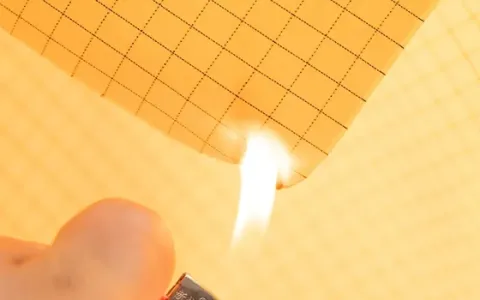
Imagine this: a hotel guest drops a match near a curtain. The fabric ignites in seconds, and the fire spreads rapidly through the lining. Within minutes, the entire room is engulfed. This isn’t a scene from a movie—it’s a real risk when fire retardant lining fabrics fail to meet standards. But what if the lining itself could stop the fire in its tracks? The answer lies in high-performance fire retardant lining fabrics engineered to resist ignition, slow flame spread, and self-extinguish. In this blog, we’ll explore why not all fire retardant linings are created equal, the costly consequences of choosing the wrong one, and how Jiangsu Textile Research Institute Inc. is setting new benchmarks in fire safety.
Pain Point 1: Flammability That Fails the Test
In industries like hospitality, transportation, and public infrastructure, fire safety regulations are stringent. Yet many lining fabrics on the market claim to be fire retardant but fail under real-world conditions. For example, a cruise ship operator installed linings that passed lab tests but, in a full-scale mock-up, the fabric melted and dripped, spreading flames to adjacent materials. The result? A failed safety audit, a delayed launch, and over $500,000 in retrofitting costs. The root cause: inferior fire retardant treatments that wash out or degrade, leaving the fabric vulnerable.
Pain Point 2: Durability vs. Fire Safety Trade-off
Often, fire retardant linings sacrifice durability for safety. In high-traffic areas like office buildings or theaters, linings must withstand repeated cleaning and abrasion. A facility manager in Chicago reported that their fire retardant linings lost effectiveness after just 20 wash cycles, forcing replacement within a year. The cost: not just the fabric itself, but labor, downtime, and the risk of non-compliance. The hidden expense of frequent replacements can triple the initial budget, making the “cheaper” option far more costly in the long run.
Pain Point 3: Compliance Complexity and Certification Gaps
Navigating fire safety standards (NFPA 701, EN 13501-1, ASTM E84) is a maze. Many suppliers provide vague certifications or test reports that don’t match the actual product. A European distributor discovered that their lining supplier’s EN 13501-1 certificate was for a different fabric composition, leading to a recall and a hefty fine. The lack of transparency and traceability in the supply chain can expose businesses to legal liabilities and reputational damage.
Solution: Engineered Fire Retardant Linings from Jiangsu Textile Research Institute Inc.
At Jiangsu Textile Research Institute Inc., we tackle these pain points head-on with advanced fire retardant lining fabrics that combine inherent flame resistance, durability, and certified compliance. Our linings are engineered with proprietary treatments that are integrated into the fiber structure, not just coated, ensuring permanent fire retardancy that survives washing and wear.
| Property | Standard Linings | Jiangsu Textile Research Institute Linings |
|---|---|---|
| Flame Spread Rate (ASTM E84) | Class B (25-50) | Class A (<25) |
| Afterglow Time | >5 seconds | 0 seconds |
| Wash Durability (cycles) | 20-30 | 100+ |
| Certifications | Limited | NFPA 701, EN 13501-1, ASTM E84, IMO FTP |
Customer Success Stories
Case 1: Global Hotel Chain, Dubai
When a luxury hotel chain in Dubai faced repeated fire safety violations due to failing linings, they switched to our fire retardant linings. After installation, their linings passed NFPA 701 with zero flame spread, and after 50 wash cycles, the fire retardancy remained intact. “We finally have peace of mind—and our guests are safer,” said Ahmed Al-Farsi, Facilities Director. The hotel reduced replacement costs by 60% and avoided potential fines.
Case 2: Theater Renovation, London
A historic theater in London needed linings that met EN 13501-1 B-s1,d0 while preserving acoustic properties. Our custom-engineered linings achieved the rating and offered superior sound absorption. “The linings exceeded our expectations—fire safety without compromising acoustics,” noted Emma Clarke, Project Manager. The theater saved £200,000 in potential redesign costs.
Case 3: Cruise Ship Operator, Miami
A cruise line specified IMO FTP compliant linings for a new vessel. Our linings passed all tests, including low smoke and toxicity. “Jiangsu’s technical support was invaluable—they provided full documentation and on-site testing,” said Carlos Mendez, Procurement Manager. The ship launched on time, with zero safety issues.
Case 4: Office Tower, Singapore
An office tower required linings that could withstand frequent cleaning and maintain fire safety. Our linings, tested to 100 wash cycles, remained compliant. “We’ve cut maintenance costs by 40% and improved safety,” said Lim Wei, Building Manager.
Applications and Partnerships
Our fire retardant lining fabrics are used in hotels, theaters, cruise ships, offices, and public buildings worldwide. We partner with leading distributors and manufacturers, such as SafeFabrics International in Europe and FireGuard Solutions in North America, who rely on our consistent quality and technical support. These partnerships ensure that our linings reach projects with the highest safety standards.
FAQ
Q: How do your linings achieve permanent fire retardancy?
A: We use a proprietary process that incorporates fire retardant molecules into the polymer structure, so they don’t wash out or degrade. This ensures performance for the life of the fabric.
Q: Can you provide custom solutions for unique applications?
A: Yes, we work with clients to engineer linings that meet specific standards, such as IMO for marine or EN 13501-1 for Europe, while addressing factors like weight, breathability, and acoustics.
Q: What testing do you perform?
A: We test to NFPA 701, ASTM E84, EN 13501-1, and IMO FTP. We also offer third-party verification and provide full traceability.
Q: How do you ensure consistency across batches?
A: Our ISO 9001-certified facilities use rigorous quality control, including inline monitoring and batch testing, to guarantee consistent fire retardancy.
Q: What is the lead time for orders?
A: Standard lead time is 4-6 weeks, depending on quantity and customization. We also offer expedited options for urgent projects.
Conclusion & Call to Action
Choosing the right fire retardant lining fabric is not just about compliance—it’s about protecting lives and assets. With Jiangsu Textile Research Institute Inc., you get linings that are rigorously tested, durable, and backed by expert support. Don’t leave safety to chance. Contact our sales engineers today to discuss your project, or download our technical white paper on advanced fire retardant linings for in-depth data and case studies.
Related News
Read More >-
![Is Your Garment Fabric Yarn Costing You Millions?]()
Is Your Garment Fabric Yarn Costing You Millions?
1. Introduction: The Hidden Costs of Yarn 2. Pain Points: Quality Inconsistency, Supply Chain Disruptions, and Performance Gaps 3. Solutions: Advanced Yarn Engineering and Quality Control 4. Case Studies: Real-World Success Stories 5. Applications and Partnerships: Trusted by Industry Leaders 6. FAQ: Technical Insights for Engineers and Procurement Managers 7. Conclusion: Take Action to Optimize Your Yarn Strategy
-
![Is Your Anti-Bacterial Fabric Really Safe?]()
Is Your Anti-Bacterial Fabric Really Safe?
1. Introduction: The hidden truth behind anti-bacterial fabrics 2. Pain Points: Why conventional anti-bacterial treatments fail - Durability issues - Skin irritation and toxicity - Environmental impact 3. Solutions: Advanced anti-bacterial fabric technologies - Durable silver-ion technology - Non-toxic, skin-safe treatments - Eco-friendly manufacturing 4. Customer Success Stories - Case 1: Healthcare provider in Germany - Case 2: Sportswear brand in the USA - Case 3: Hospitality chain in France - Case 4: Medical textile distributor in Japan 5. Applications and Partnerships - Key application areas - Strategic partnerships 6. FAQ: Engineers and Procurement Managers Ask 7. Conclusion and Call to Action
-
![Can Fire Resistant Fabrics Survive 2000°F?]()
Can Fire Resistant Fabrics Survive 2000°F?
1. Introduction: The 2000°F Challenge 2. Pain Points in High-Temperature Applications 3. Solutions: Engineering Fire Resistant Fabrics for Extreme Heat 4. Customer Success Stories 5. Applications and Partnerships 6. FAQ for Engineers and Procurement Managers 7. Conclusion and Call to Action
-
![Can Antistatic Twill Fabric Cut Downtime?]()
Can Antistatic Twill Fabric Cut Downtime?
1. Introduction: The Hidden Cost of Static in High-Tech Manufacturing 2. Pain Points: ESD Damage, Dust Attraction, and Operator Discomfort 3. The Solution: How Antistatic Twill Fabric Works 4. Customer Success Stories 5. Applications and Partnerships 6. FAQ for Engineers and Procurement Managers 7. Conclusion and Call to Action