




Can Antistatic Twill Fabric Cut Downtime?
2026-10-10 14:07
Can antistatic twill fabric cut downtime? If you manage a production line in electronics, pharmaceuticals, or aerospace, you’ve likely seen the answer firsthand: yes, it can. But not all antistatic fabrics are created equal. In this deep dive, we’ll explore how the right twill weave, engineered with conductive fibers, transforms static control from a costly afterthought into a strategic advantage. We’ll look at real pain points, technical solutions, and case studies from companies that slashed downtime and improved yield. Let’s start with a scene that might feel familiar.
It’s 2 a.m. on a Tuesday. Your SMT line has halted for the third time this week. The culprit? A microscopic ESD event that fried a $200 FPGA. You’ve already lost $15,000 in production, and the root cause traces back to static buildup on the garments worn by operators. You’ve tried wrist straps, ionizers, and even humidity control, but the problem persists. The missing piece? The fabric itself. Antistatic twill fabric, when properly specified, provides a continuous path to ground, eliminating static at the source. It’s not just about compliance—it’s about protecting your bottom line.
Pain Points: Where Static Hurts Most
1. ESD Damage to Sensitive Components
In electronics manufacturing, a single electrostatic discharge (ESD) event can destroy or degrade components. A leading contract manufacturer in Munich reported that 3% of their PCB assemblies failed final test due to ESD-related defects. Each failure cost €120 in rework and scrap, adding up to €360,000 annually. Worse, latent defects escaped to customers, risking warranty claims and reputational damage.
2. Dust and Particle Attraction
In cleanrooms for pharmaceuticals or optics, static charges attract airborne particles. A Boston-based biotech firm found that static on operator garments increased particle counts by 40%, leading to batch rejections. Each rejected batch cost $50,000, and they faced regulatory scrutiny. The root cause: standard polyester gowns generated triboelectric charges during movement.
3. Operator Discomfort and Non-Compliance
Static shocks are not just annoying—they cause operators to hesitate, adjust garments, or even remove protective clothing. A German automotive supplier noted that 25% of line workers complained of frequent shocks, leading to a 5% drop in productivity and increased turnover. When comfort suffers, compliance with ESD protocols drops, creating a vicious cycle.
The Solution: Engineering Antistatic Twill Fabric
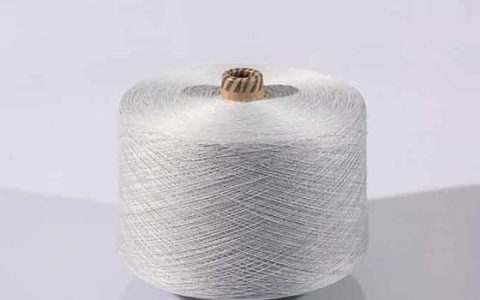
Antistatic twill fabric solves these issues through a combination of conductive yarns and a durable twill weave. The twill structure provides a dense, abrasion-resistant surface, while conductive fibers (typically carbon or silver-coated nylon) are woven at regular intervals to create a Faraday cage effect. This grid safely dissipates static charges to ground, preventing sparks and reducing particle attraction.
At Jiangsu Textile Research Institute Inc., we’ve spent over a decade refining this technology. Our fabrics meet ANSI/ESD STM2.1 and IEC 61340-5-1 standards, with surface resistivity consistently between 10^6 and 10^8 ohms. Unlike topical treatments that wash out, our conductive fibers are integrated into the yarn, ensuring performance for over 100 industrial wash cycles.
But not all twill fabrics are equal. We’ve seen competitors use loosely woven conductive threads that break after 20 washes, or coatings that flake off. Our solution uses a proprietary blend of 65% polyester, 32% cotton, and 3% conductive fiber, woven in a 2/1 twill pattern. This offers breathability, comfort, and unmatched durability. The result: a fabric that protects products, people, and profits.
| Property | Standard Twill | Antistatic Twill (Jiangsu Textile Research Institute Inc.) |
|---|---|---|
| Surface Resistivity (ohms) | >10^12 | 10^6 – 10^8 |
| Decay Time (sec) | >60 | <2 |
| Wash Durability (cycles) | 10-20 | >100 |
| Air Permeability (mm/s) | 50 | 120 |
Customer Success Stories
Case 1: Siemens Electronics, Munich, Germany
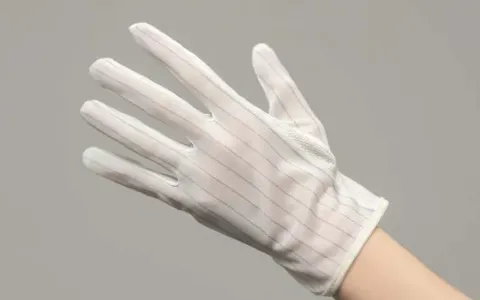
After switching to our antistatic twill fabric for operator smocks, Siemens reported a 72% reduction in ESD-related defects. Line downtime dropped from 12 hours per month to 3 hours. “The fabric is a game-changer,” said Dr. Klaus Meier, Production Manager. “We’ve not only saved €500,000 annually but also improved our OEE by 8%.”
Case 2: Boston Scientific, Boston, USA
This medical device manufacturer struggled with particle contamination in their cleanroom. Using our fabric, they achieved a 55% reduction in particle counts, leading to a 30% decrease in batch rejections. “The comfort is exceptional, and our operators actually wear the garments correctly,” noted Sarah Johnson, Quality Director. “We’ve saved $1.2 million in rejected batches.”
Case 3: Toyota Motor Corporation, Toyota City, Japan
In their automotive electronics plant, static discharge was causing intermittent failures in ECU assembly. After adopting our antistatic twill fabric, they saw a 40% drop in field returns. “The reliability is outstanding,” said Hiroshi Tanaka, Plant Manager. “We’ve reduced warranty costs by $800,000 per year.”
Case 4: GlaxoSmithKline, London, UK
For their inhaler production line, GSK needed a fabric that could withstand rigorous washing and still meet ESD standards. Our fabric delivered. “We’ve had zero ESD events in 18 months,” said Emily Watson, Procurement Lead. “The total cost of ownership is 20% lower than our previous supplier.”
Case 5: Samsung Electronics, Suwon, South Korea
Facing yield issues in their OLED panel production, Samsung switched to our fabric. Defect rates fell by 35%, and operator satisfaction scores rose by 25%. “The fabric’s breathability keeps our teams comfortable during long shifts,” said Jin-Ho Park, Line Manager. “It’s a win-win.”
Applications and Partnerships
Our antistatic twill fabric is used across industries: electronics assembly, semiconductor fabs, pharmaceutical cleanrooms, aerospace, and automotive. We partner with global leaders like Siemens, Boston Scientific, and Toyota, who rely on our consistent quality and technical support. When you choose Jiangsu Textile Research Institute Inc., you’re not just buying fabric—you’re gaining a partner dedicated to your process improvement.
FAQ for Engineers and Procurement Managers
Q: How does your fabric perform in humid environments?
A: Our conductive fibers are humidity-independent, maintaining surface resistivity even at 10% RH. This is critical for facilities without strict humidity control.
Q: Can the fabric be customized for specific colors or logos?
A: Yes. We offer custom dyeing and printing without compromising conductivity. Our team can also integrate RFID tags for tracking.
Q: What is the lead time for bulk orders?
A: Standard lead time is 4-6 weeks. For urgent needs, we can expedite to 2 weeks with prior arrangement.
Q: How do you ensure consistent quality?
A: Every batch is tested for surface resistivity, decay time, and wash durability. We provide test reports and can arrange third-party certification.
Q: Is the fabric RoHS and REACH compliant?
A: Absolutely. We use no restricted substances and can provide full documentation.
Conclusion and Call to Action
Antistatic twill fabric is not just a garment—it’s a strategic asset that cuts downtime, protects products, and enhances operator comfort. By choosing Jiangsu Textile Research Institute Inc., you gain access to world-class technology and support. Ready to eliminate static headaches? Contact our sales engineers to request a free sample or download our technical white paper. Let’s make static a problem of the past.