



How to Choose Cleanroom Clothing for Different Cleanroom Classes
2026-10-29 09:27
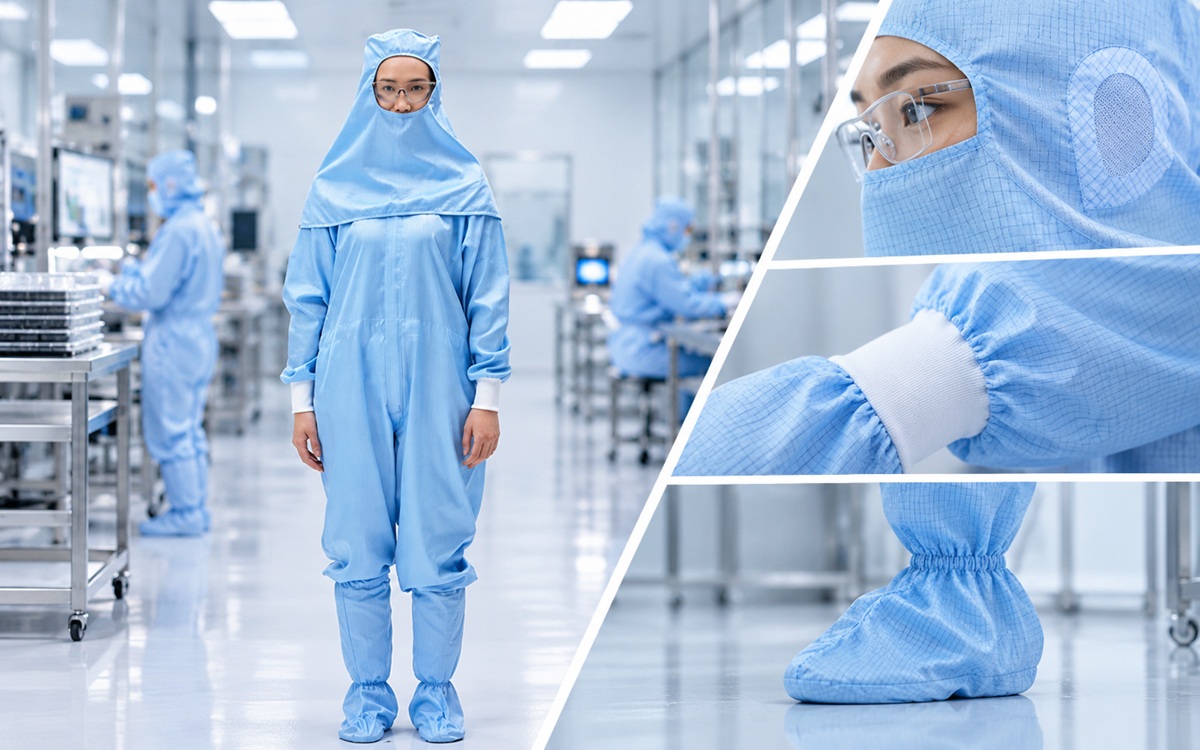
Choosing the right cleanroom clothing depends on more than selecting a coverall, jacket, or lab coat. Different cleanroom classes require different levels of contamination control, and the appropriate garment system must match the cleanliness requirements, production activities, and industry regulations.
For example, an ISO Class 8 production area may use a cleanroom coat or two-piece suit with suitable head and footwear protection, while an ISO Class 5 environment generally requires more comprehensive personnel coverage. However, ISO 14644-1 does not prescribe a specific clothing configuration for each cleanroom class. Garment requirements must be established through contamination risk assessment and applicable operating procedures.
This guide explains how to select cleanroom garments for ISO Class 5, 6, 7, and 8 environments, with practical recommendations for fabric performance, garment design, and B2B purchasing.
Understanding ISO Cleanroom Classes and Clothing Requirements
Cleanrooms are classified under ISO 14644-1 according to the concentration of airborne particles permitted at specified particle sizes.
Lower ISO class numbers indicate stricter airborne particle cleanliness requirements.
However, the classification describes environmental cleanliness, not a garment's individual performance. A product marketed as an "ISO Class 5 cleanroom suit" does not automatically satisfy the requirements of every ISO Class 5 facility.
The appropriate garment system depends on factors such as:
Cleanroom classification and operating conditions
Particle or microbial contamination risks
Personnel movement and working activities
Product sensitivity
Electrostatic discharge requirements
Applicable pharmaceutical or industrial regulations
ISO 14644-5:2025 addresses operational control programs, including personnel management and gowning procedures. It emphasizes selecting garments according to the cleanliness requirements and activities of the facility.
Cleanroom Clothing Requirements for ISO Class 5, 6, 7, and 8
Different cleanroom classes generally require different levels of personnel coverage. The following table provides a practical starting point for garment selection, rather than a universal regulatory checklist.
| Cleanroom Class | Typical Garment Approach | Key Selection Priority |
|---|---|---|
| ISO Class 5 | Full-body coverall, hood, gloves, and appropriate cleanroom footwear | High particle containment and comprehensive coverage |
| ISO Class 6 | Full-body coverall with suitable head and footwear protection | Low particle shedding and reliable garment coverage |
| ISO Class 7 | Coverall or approved cleanroom suit system, with suitable accessories | Balance contamination control, durability, and comfort |
| ISO Class 8 | Cleanroom coat, jacket, two-piece suit, or coverall as required | Appropriate particle control and practical operation |
The exact configuration must be determined by the facility's contamination-control program. For example, aseptic pharmaceutical operations may require sterile garments even when another industry operating at a similar ISO classification does not.
ISO Class 5: Comprehensive Contamination Control
ISO Class 5 cleanrooms have stringent airborne particle cleanliness requirements. They are used in applications such as critical semiconductor processes and certain pharmaceutical operations.
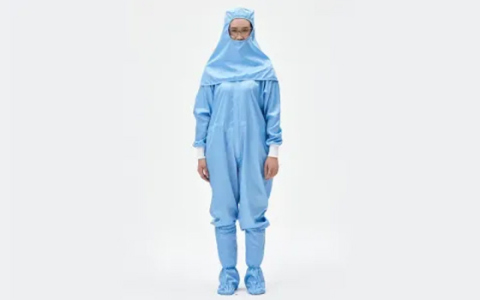
For these environments, full-body cleanroom coveralls are commonly preferred because they provide extensive coverage and help contain particles released by personnel.
A garment system may include:
Low-linting full-body coveralls
Close-fitting hoods
Suitable gloves
Cleanroom boots or overboots
Face protection where required

Fabric barrier performance, seam construction, and garment fit are particularly important.
Where sterile pharmaceutical processing is involved, sterilization, aseptic gowning, garment qualification, and applicable GMP requirements must also be considered.
ISO Class 6: Low-Shedding Full-Body Garments
ISO Class 6 environments also require effective control of contamination generated by personnel.
A cleanroom suit with extensive body coverage is commonly selected, particularly when workers perform frequent movements or handle sensitive products.
Lightweight, tightly woven polyester filament fabrics may be suitable because they can provide low particle shedding while supporting repeated use.
Buyers should evaluate fabric strength, barrier performance, garment closures, and compatibility with cleaning procedures.
Where electronics or semiconductor components are handled, conductive yarns may also be incorporated into the fabric to provide electrostatic control.
ISO Class 7: Balancing Protection and Practicality
ISO Class 7 cleanrooms are used across electronics, medical device manufacturing, precision production, and other controlled operations.
Depending on the contamination risk assessment, the garment system may include a coverall, a two-piece cleanroom suit, or another approved configuration.
For B2B buyers, the main challenge is balancing cleanliness performance with comfort and production efficiency.
Important considerations include:
Appropriate body and hair coverage
Low-linting fabric
Durable seams and closures
Comfortable fit for extended shifts
Compatibility with cleanroom laundering
An ESD cleanroom garment may be needed when electrostatic discharge is also a concern.
However, ESD performance and particle-control performance should be verified separately.
ISO Class 8: Practical Cleanroom Workwear
ISO Class 8 environments generally permit higher airborne particle concentrations than ISO Class 5–7 environments.
Depending on facility procedures, suitable clothing may include cleanroom jackets, coats, two-piece suits, or full-body garments.
Typical accessories may include hair covers, dedicated footwear, or shoe covers.
For these applications, buyers often prioritize comfortable movement, durability, easy garment handling, and sufficient contamination control.
However, a simpler garment configuration should not be selected solely because the facility is classified as ISO Class 8. Processes involving exposed sensitive products or additional hazards may require more comprehensive protection.
What Fabric Should You Choose for Each Cleanroom Class?
The garment design is only one part of the selection process. Cleanroom fabric determines how effectively the clothing limits particle shedding and withstands its intended operating conditions.
Low-Linting Polyester Filament Fabrics
Tightly woven polyester filament fabrics are widely used in reusable cleanroom clothing.
Compared with fabrics containing loose staple-fiber surfaces, properly constructed continuous-filament fabrics can help reduce fiber shedding.
However, buyers should evaluate actual fabric performance rather than assuming every polyester fabric is suitable for cleanroom use.
Relevant properties include particle shedding, particle penetration or retention, abrasion resistance, and laundering durability.
Antistatic Fabrics for ESD-Sensitive Cleanrooms
In electronics and semiconductor manufacturing, contamination control may need to be combined with electrostatic discharge protection.
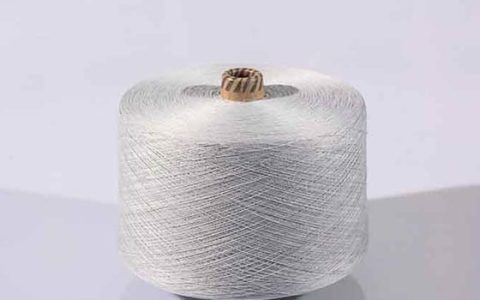
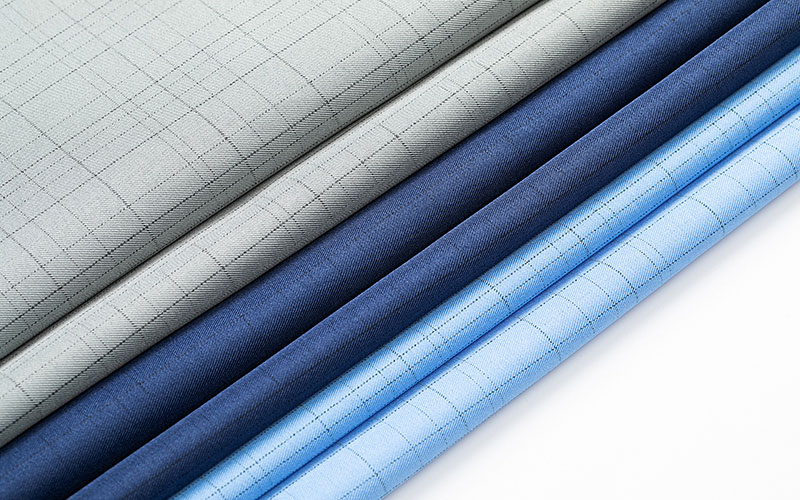
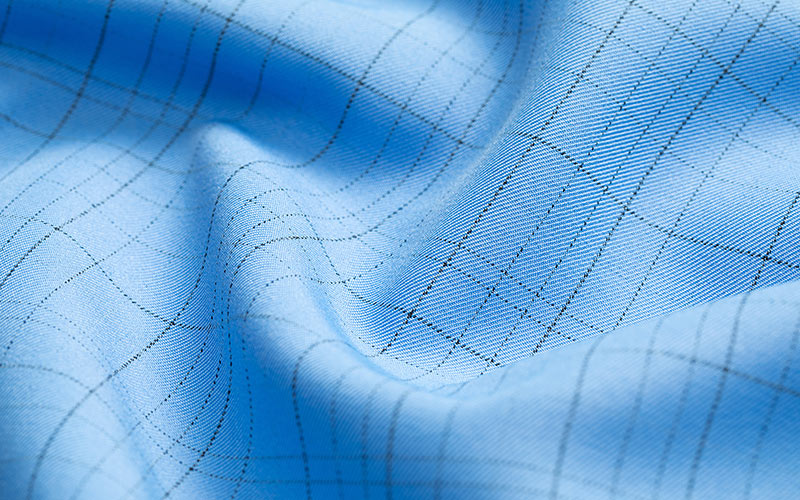
Antistatic fabric can incorporate carbon-based conductive yarns into a woven textile structure.
These conductive elements help control electrostatic charge associated with the garment.
CJTI offers cleanroom clothing constructed using polyester and conductive fiber technologies for controlled industrial environments.
Nevertheless, conductive fabric alone does not guarantee compliance with the facility's ESD control program. Electrical performance must be evaluated using appropriate methods.
Reusable vs. Disposable Cleanroom Fabrics
Reusable cleanroom garments are appropriate when a validated laundering and garment management process is available.
Disposable garments may be preferred where contamination risks, cleaning logistics, or process requirements make reuse impractical.
Neither approach is automatically superior for a particular ISO class.
The choice should consider garment qualification, total operating cost, change frequency, cleaning procedures, and the risk of contamination during handling.
Cleanroom Clothing Requirements in Pharmaceutical vs. Electronics Manufacturing
Cleanroom classification is not the only factor that determines garment selection.
Two facilities with similar particle cleanliness requirements may need different clothing systems because their production risks differ.
Pharmaceutical Cleanrooms: Understand EU GMP Grades A–D
Pharmaceutical manufacturers may follow EU GMP Annex 1 requirements for sterile medicinal product manufacturing.
These use Grades A, B, C, and D, which should not be treated as direct garment-selection equivalents of ISO classes.
For example:
Grade A/B operations: Require stringent personnel gowning controls. Grade B personnel entering areas associated with Grade A operations generally require appropriately sterilized protective garments, including suitable head, face, eye, hand, and footwear protection.
Grade C: Typically requires covered hair and facial hair, an appropriate trouser suit with gathered wrists and a high neck, and suitable disinfected footwear.
Grade D: Typically requires covered hair and facial hair, general protective clothing, and appropriate footwear.
Additional protective items may be required based on contamination risks.
For buyers supplying pharmaceutical cleanroom garments, the relevant GMP grade and contamination-control strategy should therefore be confirmed alongside any ISO classification.
Electronics Cleanrooms: Combine Cleanliness and ESD Control
Electronics and semiconductor manufacturing may require both particle control and ESD protection.
In these environments, cleanroom garments may include conductive fibers to help manage electrostatic charge.
For example, a garment designed for an electronics cleanroom should be evaluated for both low particle shedding and electrostatic performance.
The required clothing system must also be compatible with other ESD controls, including appropriate footwear, flooring, and grounding arrangements.
Choosing Cleanroom Clothing from CJTI
CJTI supplies functional textiles and cleanroom clothing for industrial controlled environments, including products with antistatic properties.
Its cleanroom clothing range includes high-density antistatic garments, stand-up collar designs, half-placket styles, separate suits with hats, and cleanroom coats.
These options allow buyers to consider different garment constructions and levels of coverage according to their operational requirements.
For customized cleanroom workwear, buyers should provide the target ISO class, industry, relevant contamination-control requirements, garment style, preferred fabric composition, ESD requirements, and applicable testing criteria.
CJTI's product range can be explored through its cleanroom clothing collection.
The final garment configuration should be validated against the customer's specific cleanroom operating conditions rather than selected by ISO class alone.
Frequently Asked Questions
What clothing is typically used in an ISO Class 5 cleanroom?
Full-body coveralls, hoods, gloves, and appropriate cleanroom footwear are commonly used. However, the complete garment system depends on the facility's activities, contamination-control requirements, and applicable industry regulations.
Can I wear a cleanroom jacket in an ISO Class 7 cleanroom?
Possibly, if the facility's risk assessment and gowning procedures permit it. Some ISO Class 7 environments require more comprehensive coverage, so a jacket should not automatically be considered sufficient.
Is antistatic clothing required in every cleanroom?
No. Antistatic clothing is particularly important where electrostatic discharge presents a risk. Cleanroom particle-control requirements and ESD requirements should be evaluated separately.
Does ISO 14644-1 specify what garments workers must wear?
No. ISO 14644-1 establishes airborne particle cleanliness classifications. Garment selection is addressed through cleanroom operating procedures, risk assessment, and other applicable standards and regulations.
How often should cleanroom garments be replaced?
There is no universal replacement frequency for every cleanroom class. Reusable garments should be inspected and managed according to validated laundering procedures, garment qualification, damage criteria, and the facility's contamination-control program.
Conclusion
Choosing the right cleanroom clothing for different cleanroom classes requires understanding both the target cleanliness level and the risks associated with the production process.
ISO Class 5 and 6 environments commonly require comprehensive body coverage and strict particle-control performance, while ISO Class 7 and 8 facilities may allow more flexible garment configurations depending on their operating requirements.
For B2B buyers, the most reliable approach is to define the cleanroom classification, evaluate applicable industry standards, select suitable fabric and garment construction, and verify performance through appropriate testing.
The best cleanroom garment is not simply the one associated with the lowest ISO class. It is the clothing system that consistently supports the facility's required contamination control, operational procedures, and product quality.
Related News
Read More >-
![Cleanroom Clothing vs. Antistatic Clothing: What's the Difference?]()
Cleanroom Clothing vs. Antistatic Clothing: What's the Difference?
Compare cleanroom clothing vs. antistatic clothing, including key differences in fabric, ESD protection, contamination control, standards, and applications.
-
![How to Choose Stainless Steel Yarn for Conductive Textiles?]()
How to Choose Stainless Steel Yarn for Conductive Textiles?
Learn how to choose stainless steel yarn for conductive textiles. Compare fiber content, electrical resistance, yarn count, durability, and testing requirements.
-
![Stainless Steel Yarn vs. Conductive Yarn: What's the Difference?]()
Stainless Steel Yarn vs. Conductive Yarn: What's the Difference?
Compare stainless steel yarn with carbon and silver-coated conductive yarns. Explore differences in conductivity, durability, flexibility, and applications.
-
![How Does an Antistatic Jacket Work?]()
How Does an Antistatic Jacket Work?
Learn how an antistatic jacket works, how conductive yarn and antistatic fabric dissipate static charge, and what affects ESD protection performance.
-
![What Is an Antistatic Jacket?]()
What Is an Antistatic Jacket?
Learn what an antistatic jacket is, how it works, the materials used, key applications, ESD standards, and how to choose the right jacket for work.
-
![What Is Stainless Steel Yarn Used For?]()
What Is Stainless Steel Yarn Used For?
Discover what stainless steel yarn is used for, from antistatic and EMI shielding fabrics to smart textiles, heating, and protective clothing.
-
![What Is Stainless Steel Yarn?]()
What Is Stainless Steel Yarn?
What is stainless steel yarn? Learn about its conductivity, properties, types, applications, and uses in antistatic, ESD, and functional textiles.
-
![What Are Flame Retardant Textiles?]()
What Are Flame Retardant Textiles?
Learn what flame retardant textiles are, how they work, key fabric types, applications, standards, and how to choose flame-resistant fabrics for protective clothing.