





How ESD Clothing Works: Principles, Materials, and Industrial Applications
2026-04-10 14:58
In industries where sensitive electronic components are handled daily, even a small static charge can cause serious damage. This is where ESD clothing plays a critical role. Designed to control and dissipate static electricity, ESD clothing helps protect both products and workers in static-sensitive environments. From semiconductor manufacturing to cleanroom operations, understanding how ESD clothing works is essential for maintaining safety, quality, and compliance.
This article explores the science behind ESD clothing, including its working principles, materials, and real-world applications across modern industries.

What Is Electrostatic Discharge (ESD)?
Electrostatic discharge (ESD) is the sudden flow of electricity between two objects with different electrical potentials. This typically occurs when a charged object comes into contact with a conductive surface, releasing stored static electricity in a rapid burst.
In everyday life, ESD can be experienced as a small shock when touching a metal surface. However, in industrial environments, even a tiny discharge can damage sensitive electronic components such as microchips, circuit boards, and semiconductors.
Static electricity is generated through friction, separation, or movement of materials. Without proper control measures like ESD clothing, these charges can accumulate on the human body and transfer to delicate equipment. This is why ESD clothing is considered a fundamental part of static control systems.
Why ESD Protection Is Critical in Modern Industries
As technology advances, electronic components become smaller and more sensitive to static electricity. In industries such as electronics manufacturing, aerospace, and medical device production, ESD can lead to:
Product defects and failures
Reduced product lifespan
Increased production costs
Safety risks for workers
ESD clothing helps mitigate these risks by preventing the buildup and sudden discharge of static electricity. Alongside grounding systems and controlled environments, ESD clothing ensures that static charges are safely managed.
In cleanroom environments, ESD garments are especially important. These environments require strict contamination and static control, making antistatic clothing essential for maintaining operational standards.
How ESD Clothing Works
The effectiveness of ESD clothing lies in its ability to control static electricity through specialized materials and fabric structures. Instead of allowing static charges to accumulate, ESD clothing safely dissipates them, reducing the risk of electrostatic discharge.
Conductive and Antistatic Fibers Explained
At the core of ESD clothing are conductive fibers and conductive yarn integrated into the fabric. These fibers are often made from materials such as carbon or metal blends and are woven into the textile in grid or stripe patterns.
These conductive fibers create a network that allows electrical charges to move freely across the surface of the fabric. Unlike regular textiles, which trap static electricity, antistatic fabric enables controlled conductivity.
By incorporating conductive yarn, ESD clothing ensures that static charges do not remain localized but are instead distributed evenly across the garment.
Charge Dissipation Mechanism
The primary function of ESD clothing is to dissipate static electricity. When a person wearing ESD clothing generates static charge, the ESD fabric absorbs the charge and spreads it across the conductive network within the garment.
This process, known as charge dissipation, prevents the buildup of high-voltage static electricity. The charge is then safely transferred to the ground through additional ESD control measures, such as grounding straps or conductive flooring.
Because of this mechanism, ESD clothing significantly reduces the likelihood of sudden electrostatic discharge, making it essential in static-sensitive environments.
The Faraday Cage Effect in ESD Garments
Another important principle behind ESD clothing is the Faraday cage effect. When properly worn, ESD garments form a conductive enclosure around the body, shielding external components from static charges.
This effect ensures that any static electricity generated by the wearer is contained and evenly distributed across the garment’s surface. As a result, sensitive equipment is protected from direct exposure to electrical discharge.
By combining conductive fibers, conductive yarn, and the Faraday cage effect, ESD clothing provides a comprehensive solution for static control.
Key Materials Used in ESD Clothing
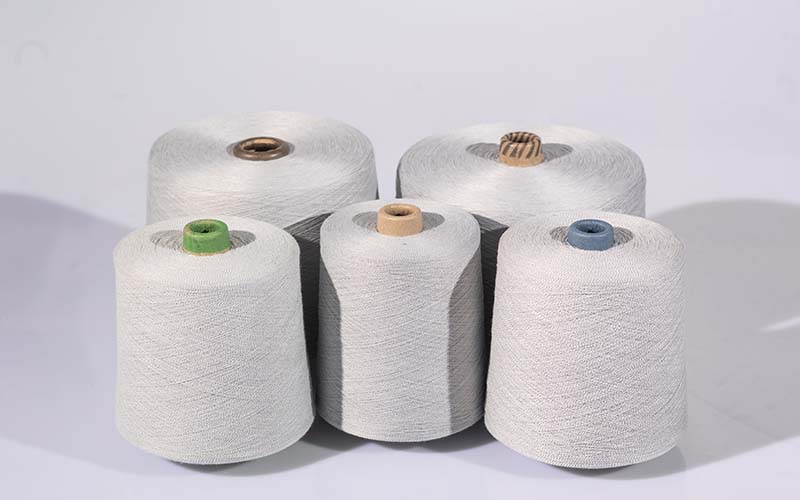
The performance of ESD clothing depends heavily on the materials used in its construction. High-quality ESD fabric is engineered to provide both conductivity and durability.
Common materials include:
Polyester blended with conductive yarn for durability and consistency
Antistatic fabric with embedded carbon fibers for reliable conductivity
Cotton blends for improved comfort while maintaining antistatic properties
These materials ensure that ESD clothing remains effective even after repeated use and washing. In cleanroom environments, specialized cleanroom garments are designed to meet strict cleanliness and static control standards.
The integration of conductive fibers into the fabric is what distinguishes ESD clothing from ordinary workwear, making it a key component of industrial safety systems.
Types of ESD Clothing and Their Applications
ESD Lab Coats and Jackets
ESD clothing such as lab coats and jackets are commonly used in electronics manufacturing and assembly environments. These garments provide upper-body protection against static buildup while maintaining comfort and flexibility.
ESD garments in this category are ideal for technicians and engineers working with sensitive components.
ESD Coveralls and Cleanroom Garments
For environments requiring full-body protection, ESD clothing in the form of coveralls is essential. These cleanroom garments are designed to minimize both static discharge and contamination.
They are widely used in:
Semiconductor manufacturing
Pharmaceutical production
Precision electronics assembly
The combination of antistatic fabric and full-body coverage ensures maximum protection in controlled environments.
ESD Gloves, Caps, and Accessories
In addition to primary garments, ESD clothing includes accessories such as gloves, caps, and shoe covers. These items help maintain a complete static control system by preventing localized charge buildup.
By using a full set of ESD garments, industries can ensure comprehensive protection against electrostatic discharge.

How to Ensure Effective ESD Protection
While ESD clothing is essential, its effectiveness depends on proper usage and system integration.
Key factors include:
Proper grounding: Using wrist straps, conductive footwear, and grounded workstations
Regular maintenance: Ensuring ESD clothing retains its conductivity after washing
Compliance with standards: Following guidelines such as ANSI/ESD S20.20 and IEC 61340
Correct garment usage: Wearing ESD garments properly to maintain full coverage
Without these measures, even high-quality ESD clothing may not provide adequate protection.
Benefits of High-Performance ESD Clothing
Investing in high-quality ESD clothing offers numerous advantages:
Reliable static control: Prevents damage to sensitive electronics
Improved product quality: Reduces defects caused by electrostatic discharge
Enhanced workplace safety: Protects both workers and equipment
Long-term durability: High-performance ESD fabric maintains effectiveness over time
Comfort and wearability: Modern antistatic clothing is designed for extended use
By integrating advanced materials such as conductive fibers and conductive yarn, ESD clothing provides a balance of protection and comfort.
Conclusion
Understanding how ESD clothing works is essential for industries that rely on static-sensitive processes. By using specialized ESD fabric, conductive fibers, and effective charge dissipation mechanisms, ESD clothing prevents the buildup and release of static electricity.
From lab coats to cleanroom garments, ESD clothing plays a vital role in maintaining safety, product quality, and operational efficiency. When combined with proper grounding systems and industry standards, ESD clothing becomes a powerful tool for controlling electrostatic discharge in modern industrial environments.
As technology continues to evolve, the importance of reliable antistatic clothing and advanced ESD garments will only continue to grow, making them indispensable in high-performance industries.
Related News
Read More >-
![How Does an Antistatic Jacket Work?]()
How Does an Antistatic Jacket Work?
Learn how an antistatic jacket works, how conductive yarn and antistatic fabric dissipate static charge, and what affects ESD protection performance.
-
![What Is an Antistatic Jacket?]()
What Is an Antistatic Jacket?
Learn what an antistatic jacket is, how it works, the materials used, key applications, ESD standards, and how to choose the right jacket for work.
-
![What Is Stainless Steel Yarn Used For?]()
What Is Stainless Steel Yarn Used For?
Discover what stainless steel yarn is used for, from antistatic and EMI shielding fabrics to smart textiles, heating, and protective clothing.
-
![What Is Stainless Steel Yarn?]()
What Is Stainless Steel Yarn?
What is stainless steel yarn? Learn about its conductivity, properties, types, applications, and uses in antistatic, ESD, and functional textiles.
-
![What Are Flame Retardant Textiles?]()
What Are Flame Retardant Textiles?
Learn what flame retardant textiles are, how they work, key fabric types, applications, standards, and how to choose flame-resistant fabrics for protective clothing.
-
![What is Cotton Flame Retardant Fabric?]()
What is Cotton Flame Retardant Fabric?
Explains what cotton flame retardant fabric is, how it works, how it differs from inherent FR materials, where it is used, what standards buyers should consider, and how to select the right fabric for a protective clothing program.
-
![Which is Better, Aramid or Kevlar Fabric?]()
Which is Better, Aramid or Kevlar Fabric?
Compare aramid fabric vs Kevlar fabric, including strength, flame resistance, applications, and key differences to choose the right protective material.
-
![What Is Aramid Fabric?]()
What Is Aramid Fabric?
Learn what aramid fabric is, its key properties, the differences between meta aramid fabric and para aramid fabric, common applications, and how to choose the right flame retardant fabric for industrial protective clothing.