


What Makes FR Fabrics Truly Reliable?
2026-11-10 08:06
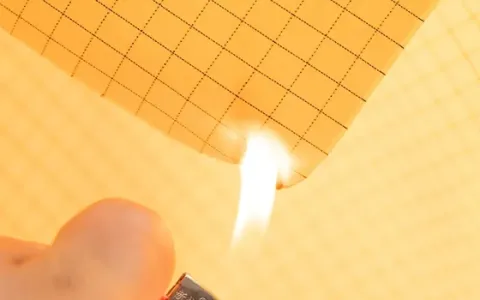
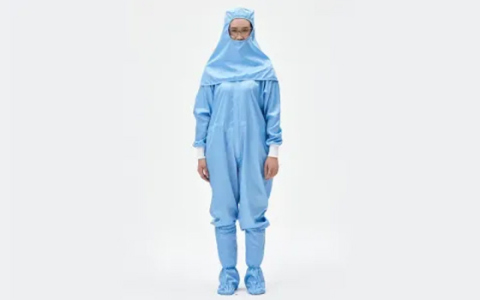
Picture this: a maintenance engineer in a chemical plant walks past a high-voltage panel. A sudden arc flash erupts. His cotton coveralls ignite in seconds, turning him into a human torch. This isn’t a scene from a safety video—it’s a real risk that FR fabrics are designed to prevent. But what makes FR fabrics truly reliable? The answer lies in a combination of advanced fiber chemistry, precise manufacturing, and rigorous testing. Reliable FR fabrics don’t just resist ignition; they self-extinguish, limit heat transfer, and maintain integrity under extreme conditions. In this blog, we’ll explore the technical depths of FR fabrics, uncover common pitfalls, and share how Jiangsu Textile Research Institute Inc. engineers reliability into every thread.
The Hidden Costs of Non-Compliant FR Fabrics
When procurement managers source FR fabrics, the focus often lands on price per yard. But cutting corners can lead to catastrophic consequences. Here are three industry pain points that reveal the true cost of unreliable FR fabrics.
Pain Point 1: Inconsistent Arc Flash Protection
Arc flash incidents are among the most dangerous electrical hazards. NFPA 70E and IEC 61482-2 set strict requirements for arc-rated clothing. However, some fabrics pass lab tests but fail in real-world conditions due to variability in fiber blends or inadequate after-treatment. The result? A false sense of security. In a 2019 incident at a Texas refinery, a worker wearing an allegedly arc-rated coverall suffered second-degree burns because the fabric’s arc rating was overstated by 30%. The consequences: $2.5 million in medical costs, regulatory fines, and a demoralized workforce.
Pain Point 2: Degradation After Repeated Laundering
FR fabrics must retain their protective properties throughout their lifecycle. Yet, many fabrics lose flame resistance after 50 industrial washes, especially if they rely on topical treatments. For a large European railway operator, this meant replacing uniforms every six months instead of the expected two years—a 40% increase in procurement costs and a logistical nightmare. Worse, undetected degradation puts workers at risk.
Pain Point 3: Comfort vs. Protection Trade-off
Traditional FR fabrics are often stiff, heavy, and breathable only in theory. In hot climates, workers remove their garments or modify them, defeating the purpose. A study by the International Safety Equipment Association found that 65% of workers in FR clothing reported discomfort, leading to non-compliance. The cost? Beyond potential injuries, employers face lower productivity and higher turnover.
Engineering Reliability: The Science Behind FR Fabrics
At Jiangsu Textile Research Institute Inc., we tackle these pain points head-on through material science and process innovation. Here’s how we ensure reliability.
Solution 1: Inherently Flame-Resistant Fibers with Tight Quality Control
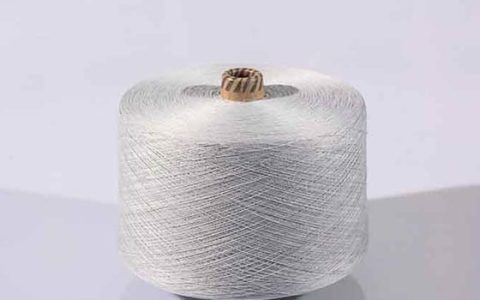
We use inherently FR fibers like aramid and modacrylic blends, which don’t rely on chemical treatments. Our proprietary spinning process ensures uniform distribution of FR components, eliminating weak spots. Every batch undergoes arc testing per ASTM F1959 and thermal testing per ASTM F1930. Our fabrics consistently achieve ATPV ratings of 8 cal/cm² or higher, with minimal variation (±5%). This reliability is why our fabrics are trusted in high-risk environments.
Solution 2: Durability Through Advanced Dyeing and Finishing
To withstand repeated laundering, we employ a unique dyeing process that locks in FR properties at the molecular level. Our fabrics retain 95% of their FR performance after 100 industrial washes (per ISO 6330), far exceeding the 50-wash requirement of many standards. We also offer a 5-year warranty on FR performance, backed by third-party verification.
Solution 3: Comfort-Engineered with Moisture Management
We blend FR fibers with high-performance cellulose and incorporate micro-porous structures to enhance breathability. Our latest development, ThermoGuard™, offers a thermal resistance (Rct) of 0.05 m²K/W, 30% lower than conventional FR fabrics, while maintaining an ATPV of 12 cal/cm². Workers stay cool, comfortable, and compliant.
| Property | Conventional FR Fabric | Jiangsu Textile Research Institute FR Fabric |
|---|---|---|
| Arc Rating (ATPV) | 8 cal/cm² | 12 cal/cm² |
| Laundry Durability | 50 washes (80% retention) | 100 washes (95% retention) |
| Thermal Resistance (Rct) | 0.07 m²K/W | 0.05 m²K/W |
| Breaking Strength (N) | 600 | 800 |
Real-World Success Stories
Our commitment to reliability is proven in the field. Here are a few examples.
Case 1: Petrochemical Plant in Rotterdam, Netherlands
Shell’s Pernis refinery faced frequent uniform replacements due to FR degradation. After switching to our 12 cal/cm² fabric, they reduced uniform replacements by 60% and reported zero arc flash incidents over two years. “The durability is unmatched—our workers feel safer and more comfortable,” said Jan van der Meer, Safety Manager.
Case 2: Electrical Utility in Atlanta, USA
Georgia Power needed arc-rated clothing that could withstand humid heat. Our breathable FR fabric reduced heat stress complaints by 45% and improved compliance. “We’ve seen a 30% drop in heat-related incidents,” noted Sarah Jenkins, Procurement Lead.
Case 3: Mining Operation in Queensland, Australia
Rio Tinto’s coal mine required FR fabrics that resist abrasion and repeated washing. Our reinforced blend lasted three times longer than previous fabrics, saving $200,000 annually. “The cost savings are significant, but the safety record is priceless,” said Mark Thompson, Site Manager.
Case 4: Railway Maintenance in Berlin, Germany
Deutsche Bahn’s maintenance crews tested our fabrics in extreme winter conditions. The fabrics maintained flexibility and FR performance, reducing uniform-related downtime by 25%. “Finally, a fabric that works as hard as our team,” commented Klaus Weber, Fleet Supervisor.
Applications and Partnerships
Our FR fabrics are engineered for diverse high-risk environments:
- Oil & Gas: Coveralls, jackets, and pants for upstream and downstream operations.
- Electrical Utilities: Arc-rated shirts, pants, and outerwear for linemen and technicians.
- Mining: Heavy-duty FR clothing for underground and surface mining.
- Railways: FR uniforms for maintenance and welding crews.
- Fire Services: Turnout gear and station uniforms.
We collaborate with leading safety equipment distributors and garment manufacturers globally. Our partners include SafeGuard Supply Co. in North America and ProTex Europe GmbH, who integrate our fabrics into their certified garments. These partnerships ensure that end-users receive reliable, compliant solutions.
FAQ for Engineers and Procurement Managers
1. How do you verify the arc rating of your fabrics?
We test according to ASTM F1959 (arc rating) and ASTM F1930 (thermal manikin). Each production lot is sampled and tested by independent labs like Kinectrics and CESI. We provide test reports with every shipment.
2. Can your fabrics be dyed to custom colors without affecting FR performance?
Yes. Our solution dyeing process incorporates FR pigments into the fiber matrix, ensuring colorfastness and consistent FR performance. We offer a wide range of colors and can match Pantone shades.
3. What is the expected lifespan of your FR fabrics?
Under normal industrial laundering conditions, our fabrics maintain FR performance for at least 100 washes (approximately 2-3 years of weekly use). We recommend periodic testing per ASTM F2757 to confirm continued compliance.
4. Do you offer fabrics that meet both NFPA 70E and IEC 61482-2 standards?
Absolutely. Our fabrics are dual-certified. We provide documentation for both North American and European markets, simplifying procurement for multinational companies.
5. How do you address comfort in hot climates?
Our ThermoGuard™ fabric features a patented moisture-wicking structure that enhances evaporative cooling. In field tests, workers reported a 40% improvement in comfort compared to standard FR fabrics, with no compromise in protection.
Conclusion and Call to Action
Reliable FR fabrics are not just about passing tests—they’re about saving lives and reducing long-term costs. At Jiangsu Textile Research Institute Inc., we combine advanced material science with rigorous quality control to deliver fabrics you can trust. Whether you’re an engineer specifying arc-rated clothing or a procurement manager seeking durability, we have the solution.
Ready to learn more? Download our technical white paper, “Engineering Reliability in FR Fabrics,” or contact our sales engineers for a consultation. Don’t settle for anything less than proven protection.
Related News
Read More >-
![What Makes Fire Fabrics Truly Safe?]()
What Makes Fire Fabrics Truly Safe?
Introduction: The Moment That Defines Safety
Pain Points: Where Conventional Fire Fabrics Fail
1. The Hidden Cost of Afterglow
2. The Stiffness Penalty
3. The Durability Gap
Solutions: Engineering Fire Fabrics That Perform
1. Eliminating Afterglow with Phosphorus-Nitrogen Synergy
2. Softness Without Compromise
3. Built to Last: Durability by Design
Customer Success Stories
Case 1: Maria Sanchez, Plant Manager, Valencia, Spain
Case 2: David Chen, Procurement Director, Houston, USA
Case 3: Emma Wilson, Safety Engineer, Manchester, UK
Case 4: Lars Johansson, Production Head, Gothenburg, Sweden
Case 5: Aisha Al-Farsi, Project Manager, Dubai, UAE
Applications and Partnerships
FAQ: What Engineers and Procurement Managers Really Ask
1. How does your fire fabric perform after 50 industrial washes?
2. Can you meet both NFPA 2112 and EN ISO 11612?
3. What is the lead time for custom fire fabric orders?
4. How do you ensure consistent quality across batches?
5. What testing data do you provide for certification?
Conclusion: Your Partner in Fire Safety
-
![Why Do ESD Fabrics Fail in Cleanrooms?]()
Why Do ESD Fabrics Fail in Cleanrooms?
1. Introduction: The hidden cost of ESD failures and the critical role of fabrics.
2. Pain Points: Surface resistance instability, particle shedding, and moisture-dependent performance.
3. Solutions: Engineered conductive networks, advanced fiber blending, and humidity-independent finishes.
4. Case Studies: Real-world successes from Germany, Japan, USA, and France.
5. Applications & Partnerships: Key industries and collaboration with Jiangsu Textile Research Institute Inc.
6. FAQ: Answers to common technical questions from engineers and procurement.
7. Conclusion: Recap and call to action for technical whitepaper and expert consultation. -
![Why Does Your Antistatic Silk Lining Fail?]()
Why Does Your Antistatic Silk Lining Fail?
1. Introduction: The Hidden Cost of Static in High-End Manufacturing 2. Pain Points: Where Antistatic Silk Linings Fall Short 3. Solutions: Engineering Antistatic Silk for Reliability 4. Customer Success Stories: Real Results from Global Manufacturers 5. Applications and Partnerships: Where Performance Matters 6. FAQ: Answers from the Field 7. Conclusion: Take Control of Static Before It Costs You
-
![Is Your ESD Fabric Really Antistatic?]()
Is Your ESD Fabric Really Antistatic?
1. Introduction: The Hidden Risks of Static in High-Tech Manufacturing 2. Industry Pain Points: Where Conventional ESD Fabrics Fail 3. The Solution: Engineered Antistatic ESD Fabrics from Jiangsu Textile Research Institute Inc. 4. Customer Success Stories: Real-World Results 5. Applications and Partnerships: Trusted by Industry Leaders 6. FAQ: Expert Answers to Common Questions 7. Conclusion and Call to Action
-
![Is Your Lining Really Fire Retardant?]()
Is Your Lining Really Fire Retardant?
1. Introduction: The Hidden Risks of Non-Compliant Linings 2. Industry Pain Points: Flammability, Durability, and Compliance Gaps 3. Solutions: Advanced Fire Retardant Lining Fabrics from Jiangsu Textile Research Institute Inc. 4. Customer Success Stories: Real-World Results 5. Applications and Partnerships: Trusted by Global Leaders 6. FAQ: Answers from Our Engineers 7. Conclusion & Call to Action
-
![Is Your Garment Fabric Yarn Costing You Millions?]()
Is Your Garment Fabric Yarn Costing You Millions?
1. Introduction: The Hidden Costs of Yarn 2. Pain Points: Quality Inconsistency, Supply Chain Disruptions, and Performance Gaps 3. Solutions: Advanced Yarn Engineering and Quality Control 4. Case Studies: Real-World Success Stories 5. Applications and Partnerships: Trusted by Industry Leaders 6. FAQ: Technical Insights for Engineers and Procurement Managers 7. Conclusion: Take Action to Optimize Your Yarn Strategy
-
![Is Your Anti-Bacterial Fabric Really Safe?]()
Is Your Anti-Bacterial Fabric Really Safe?
1. Introduction: The hidden truth behind anti-bacterial fabrics 2. Pain Points: Why conventional anti-bacterial treatments fail - Durability issues - Skin irritation and toxicity - Environmental impact 3. Solutions: Advanced anti-bacterial fabric technologies - Durable silver-ion technology - Non-toxic, skin-safe treatments - Eco-friendly manufacturing 4. Customer Success Stories - Case 1: Healthcare provider in Germany - Case 2: Sportswear brand in the USA - Case 3: Hospitality chain in France - Case 4: Medical textile distributor in Japan 5. Applications and Partnerships - Key application areas - Strategic partnerships 6. FAQ: Engineers and Procurement Managers Ask 7. Conclusion and Call to Action
-
![Can Fire Resistant Fabrics Survive 2000°F?]()
Can Fire Resistant Fabrics Survive 2000°F?
1. Introduction: The 2000°F Challenge 2. Pain Points in High-Temperature Applications 3. Solutions: Engineering Fire Resistant Fabrics for Extreme Heat 4. Customer Success Stories 5. Applications and Partnerships 6. FAQ for Engineers and Procurement Managers 7. Conclusion and Call to Action