



What Is a Fire Fighting Suit? Materials, Layers and Protection Standards
2026-11-24 16:56
Firefighters face extreme working conditions, including intense heat, direct flame exposure, radiant heat, hot liquids, and mechanical hazards. A fire fighting suit is an essential component of personal protective equipment (PPE), designed to reduce these risks while allowing firefighters to perform demanding rescue and firefighting operations.
Modern firefighting clothing combines advanced flame-resistant fibers, multilayer fabric systems, and functional garment designs. Materials such as aramid fibers play an important role in achieving a balance between thermal protection, durability, and wearing comfort.
Understanding the materials, protective layers, and international safety standards of firefighting suits is essential for fire departments, industrial safety managers, PPE distributors, and professional protective clothing buyers.
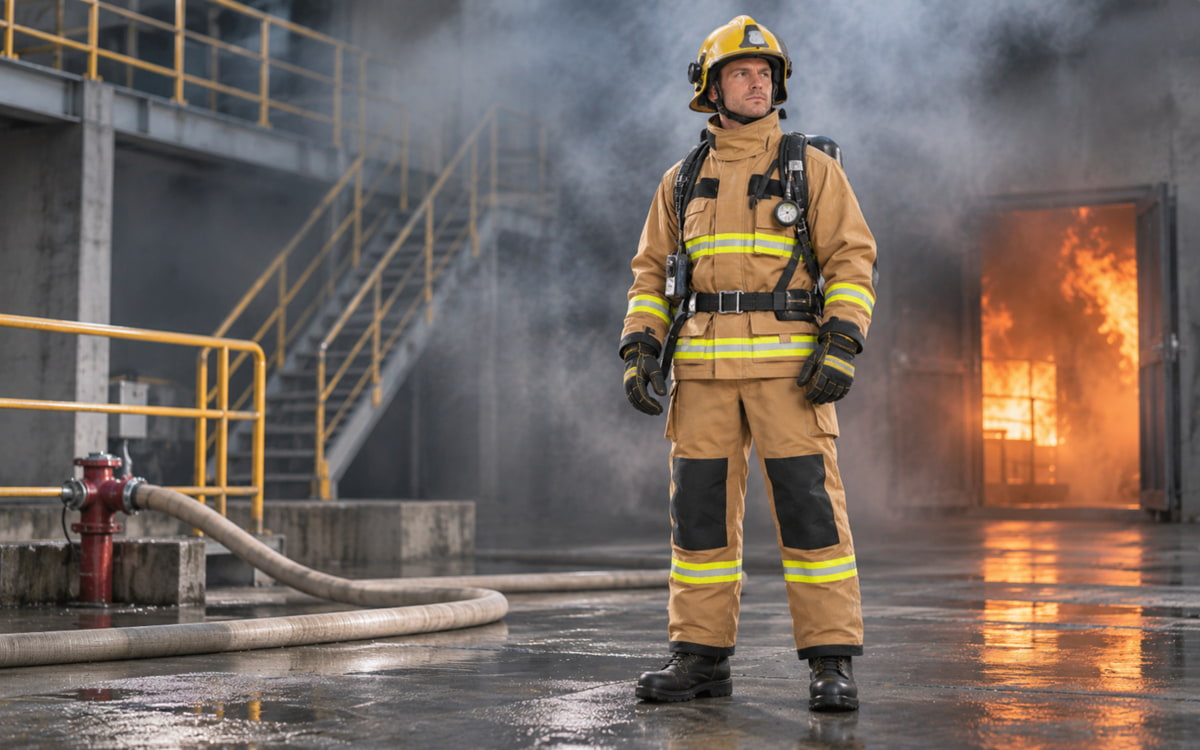
What Is a Fire Fighting Suit?
A fire fighting suit is a specialized protective garment designed to protect firefighters against thermal and physical hazards encountered during firefighting and emergency rescue operations.
A typical structural firefighting suit consists of a protective jacket and trousers, which are worn together with a helmet, gloves, protective boots, a protective hood, and respiratory protection equipment as required.
Firefighting suits are also commonly referred to as:
Firefighter suits
Firefighter protective clothing
Firefighter turnout gear
Bunker gear
Structural firefighting clothing
Unlike conventional flame retardant clothing, structural firefighting suits generally incorporate multiple protective layers to provide enhanced thermal insulation, moisture protection, and mechanical durability.
However, different types of firefighting clothing are designed for different operational environments. Structural firefighting, wildland firefighting, industrial emergency response, and proximity firefighting each have specific protective requirements.
What Are Fire Fighting Suits Made Of?
The protective performance of a firefighting suit depends heavily on its fiber composition, fabric construction, and multilayer material system.
Aramid Fibers
Aramid is one of the most widely used high-performance fibers in professional firefighting clothing. Its molecular structure provides inherent flame resistance, meaning that its flame-resistant properties are intrinsic to the fiber rather than dependent on a surface-applied chemical treatment.
Key advantages of aramid fabric include:
Inherent flame resistance
Excellent thermal stability
Resistance to melting and dripping under heat exposure
Good mechanical strength and abrasion resistance
Durable flame-resistant properties
Relatively lightweight construction
These characteristics make aramid an important material for manufacturing firefighter protective clothing and other specialized thermal protective garments.
Meta-Aramid vs. Para-Aramid
Two common types of aramid fibers used in protective textiles are meta-aramid and para-aramid.
Properties | Meta-Aramid | Para-Aramid |
|---|---|---|
Flame resistance | Excellent | Excellent |
Thermal stability | Excellent | Excellent |
Tensile strength | Moderate to high | Very high |
Abrasion resistance | Good | Excellent |
Flexibility | Relatively flexible | Relatively stiff |
Typical applications | Thermal protective fabrics | Reinforcement and high-strength fabrics |
Meta-aramid is widely used for its thermal stability and inherent flame resistance, while para-aramid provides additional mechanical strength and resistance to tearing.
Many professional aramid fire fighting suits incorporate blended fiber systems to achieve an appropriate balance between thermal protection, durability, garment weight, and flexibility.
Other Flame-Resistant Materials
In addition to aramid, firefighting garments may incorporate other high-performance materials, including:
Polybenzimidazole (PBI) fibers
Flame-resistant viscose
Flame-resistant fiber blends
Specialized moisture barrier membranes
Heat-resistant insulating materials
The selection of flame retardant fabric depends on the intended application, required protection level, garment construction, and applicable safety standards.
What Are the Different Layers of a Fire Fighting Suit?
Unlike ordinary protective workwear, structural firefighting suits typically use a multilayer construction. Each layer performs a specific protective function, and the layers work together to reduce heat transfer and protect the wearer.
1. Outer Shell
The outer shell is the first protective barrier between the firefighter and the external environment.
It is commonly manufactured from aramid-based or other high-performance flame-resistant fabrics and provides:
Resistance to flame and heat exposure
Abrasion and tear resistance
Mechanical durability
Protection against everyday operational wear
The outer shell must maintain sufficient structural integrity under the thermal and mechanical conditions specified by the applicable protective clothing standard.
2. Moisture Barrier
The moisture barrier helps prevent external water and certain liquids from penetrating the garment while allowing some perspiration vapor to escape.
This layer is particularly important during firefighting operations, where firefighters may encounter water, steam, and wet working environments.
Its performance also influences the overall breathability and physiological comfort of the garment.
3. Thermal Barrier
The thermal barrier reduces the transfer of heat from the external environment toward the wearer's body.
It commonly incorporates heat-resistant insulating fibers and textile structures that help limit heat transfer through the garment.
The design of this layer must balance thermal insulation with garment weight, flexibility, and heat stress management.
4. Comfort Lining
Some firefighting suits incorporate a separate comfort lining, while others integrate it into the thermal barrier.
The lining provides a smoother internal surface, reduces friction, and improves wearing comfort during extended operations.
Although the exact number of layers varies between garment designs, the outer shell, moisture barrier, and thermal barrier are the three principal functional components of many structural firefighting suits.
Key Features of a High-Quality Fire Fighting Suit
Flame Resistance and Thermal Protection
The primary function of firefighter protective clothing is to reduce the risk of burn injuries caused by flame exposure and heat transfer.
High-performance flame-resistant materials and appropriate multilayer construction work together to provide thermal protection. However, the protective performance must be evaluated through standardized testing of the relevant material assemblies and garment design.
High-Visibility Reflective Tape
Firefighters frequently operate in environments with smoke, limited lighting, and poor visibility.
Reflective and fluorescent trim helps improve firefighter visibility during emergency response operations, particularly under suitable lighting conditions.
A fire fighting suit with reflective tape combines thermal protective materials with enhanced visibility features, supporting professional firefighting and rescue applications.
Durability and Reinforced Construction
Firefighting operations involve frequent bending, kneeling, climbing, and contact with rough surfaces.
Reinforced knees, durable seams, secure closures, and strategically positioned pockets help improve garment durability and functionality.
High-strength fabrics and heat-resistant sewing materials are also important for maintaining garment integrity.
Breathability and Wearing Comfort
Thermal protection alone does not determine the suitability of a firefighting suit. Excessive garment weight and restricted moisture transfer can increase physiological strain.
Modern firefighting clothing therefore aims to balance thermal protection with breathability, ergonomic construction, flexibility, and freedom of movement.
Compatibility with Other Protective Equipment
A firefighting suit must function as part of a complete protective equipment system.
Garment interfaces, including cuffs, collars, trouser openings, and jacket overlaps, should be compatible with other PPE to minimize gaps in protection.
Fire Fighting Suit Standards and Certifications
International protective clothing standards establish performance requirements and testing methods for firefighting garments.
EN 469 – European Standard for Firefighter Protective Clothing
EN 469 is a European standard specifying performance requirements for protective clothing used in firefighting activities.
EN 469:2020 addresses several aspects of protective garment performance, including:
Flame spread resistance
Heat transfer from flame and radiant heat
Mechanical strength
Dimensional stability
Resistance to water penetration
Water vapor resistance
Garment design and visibility
The standard distinguishes between two levels of thermal protection:
Protection Level | Intended Application |
|---|---|
Level 1 | Certain outdoor firefighting and supporting activities, excluding structural firefighting |
Level 2 | Higher thermal protection requirements, including structural firefighting |
Water penetration and water vapor resistance are also classified separately under the standard.
NFPA Standards – North American Firefighter Protection
In North America, NFPA standards establish protective equipment requirements for firefighting and emergency response personnel.
NFPA 1970 consolidates requirements previously addressed by standards including NFPA 1971 for structural and proximity firefighting protective ensembles.
Although EN and NFPA standards both address firefighter safety, their testing methods, performance requirements, and certification systems differ.
Buyers should verify the applicable standard, edition, protection classification, and certification documentation before purchasing firefighting clothing.
Importantly, using a certified flame-resistant fabric does not automatically mean that the finished firefighting suit is certified to the same protective clothing standard.
How to Choose the Right Fire Fighting Suit
Selecting a suitable firefighting suit requires careful consideration of operational risks, protective performance, and procurement requirements.
Selection Factor | Key Considerations |
|---|---|
Intended application | Structural firefighting, industrial emergency response, or other specialized operations |
Safety standards | Applicable EN or NFPA standards and documented certification |
Fabric composition | Aramid content, fiber blends, and inherent flame resistance |
Protective construction | Outer shell, moisture barrier, and thermal insulation |
Wearing comfort | Garment weight, breathability, flexibility, and fit |
Functional design | Reflective tape, reinforced areas, pockets, and closures |
Supplier capabilities | Quality control, technical documentation, customization, and production capacity |
For PPE distributors and bulk procurement organizations, consistent product quality, material traceability, reliable delivery, and access to technical documentation are equally important.
Customization should also be evaluated carefully to ensure that modifications to materials, reflective trim, garment construction, or accessories do not compromise the certified protective performance.
Custom Aramid Fire Fighting Suits from CJTI
As a functional textile and protective clothing manufacturer established in 1958, CJTI specializes in the development and manufacturing of high-performance functional fabrics and protective garments.
CJTI's aramid fire fighting suit combines flame-resistant aramid materials with functional garment construction, reflective tape, reinforced areas, and practical pocket designs.
With integrated textile development and garment manufacturing capabilities, CJTI supports professional protective clothing procurement through:
High-performance flame-resistant material selection
Functional garment design and development
Customized sizes, colors, and garment configurations
OEM and ODM manufacturing services
Bulk supply for PPE distributors and professional buyers
Product specifications and relevant technical documentation
Whether you are sourcing firefighting clothing for PPE distribution, industrial emergency response, or professional fire service procurement, CJTI can help evaluate your material, garment, and customization requirements.
Contact CJTI to learn more about product specifications, available certification documentation, customization options, and bulk order quotations.
Frequently Asked Questions
What material is used in fire fighting suits?
Firefighting suits commonly use meta-aramid, para-aramid, PBI, and other high-performance flame-resistant materials. These materials may be combined with moisture barrier membranes and thermal insulation layers to achieve the required protective performance.
Why is aramid used in firefighter clothing?
Aramid fibers provide inherent flame resistance, excellent thermal stability, mechanical strength, and durability. Unlike many conventional synthetic fibers, aramid does not readily melt or drip when exposed to high temperatures.
How many layers does a fire fighting suit have?
Most structural firefighting suits incorporate three principal functional layers: an outer shell, a moisture barrier, and a thermal barrier. Some designs include additional layers or a separate comfort lining.
Are fire fighting suits completely fireproof?
No. Firefighting suits are designed to resist flames and reduce heat transfer within specified performance limits. No firefighting garment provides unlimited protection against extreme temperatures or prolonged fire exposure.
What is the difference between EN 469 Level 1 and Level 2?
EN 469 Level 1 addresses lower thermal protection requirements for certain firefighting and supporting activities. Level 2 provides higher thermal protection requirements and is intended for applications including structural firefighting. The appropriate protection level must be selected according to the operational risk assessment.
Related News
Read More >-
![How to Choose Antistatic Gloves: 7 Key Factors to Consider]()
How to Choose Antistatic Gloves: 7 Key Factors to Consider
Learn how to choose antistatic gloves based on ESD performance, materials, coatings, dexterity, cleanliness, durability, and applications.
-
![What Are Antistatic Gloves? How They Work, Types & Applications]()
What Are Antistatic Gloves? How They Work, Types & Applications
What are antistatic gloves and how do they work? Learn about their materials, types, ESD properties and applications in electronics and cleanrooms.
-
![How to choose anti-static fabric?]()
How to choose anti-static fabric?
Learn how to choose anti-static fabric by comparing materials, conductive fiber structures, electrical resistance, testing standards, and industrial applications.
-
![How to Choose Cleanroom Clothing for Different Cleanroom Classes]()
How to Choose Cleanroom Clothing for Different Cleanroom Classes
Learn how to choose cleanroom clothing for ISO Class 5, 6, 7, and 8 environments, including garment types, fabric requirements, ESD protection, and testing.
-
![Cleanroom Clothing vs. Antistatic Clothing: What's the Difference?]()
Cleanroom Clothing vs. Antistatic Clothing: What's the Difference?
Compare cleanroom clothing vs. antistatic clothing, including key differences in fabric, ESD protection, contamination control, standards, and applications.
-
![How to Choose Stainless Steel Yarn for Conductive Textiles?]()
How to Choose Stainless Steel Yarn for Conductive Textiles?
Learn how to choose stainless steel yarn for conductive textiles. Compare fiber content, electrical resistance, yarn count, durability, and testing requirements.
-
![Stainless Steel Yarn vs. Conductive Yarn: What's the Difference?]()
Stainless Steel Yarn vs. Conductive Yarn: What's the Difference?
Compare stainless steel yarn with carbon and silver-coated conductive yarns. Explore differences in conductivity, durability, flexibility, and applications.
-
![How Does an Antistatic Jacket Work?]()
How Does an Antistatic Jacket Work?
Learn how an antistatic jacket works, how conductive yarn and antistatic fabric dissipate static charge, and what affects ESD protection performance.