




What Are Antistatic Gloves? How They Work, Types & Applications
2024-05-28 10:22
Static electricity may seem harmless in everyday life, but in electronics manufacturing, semiconductor production, cleanrooms, laboratories, and other controlled environments, an uncontrolled electrostatic discharge can damage sensitive components, interfere with production processes, or create safety risks.
Antistatic gloves are designed to help reduce the generation and accumulation of static electricity while allowing workers to handle products safely and efficiently. Depending on their construction and intended application, they may incorporate conductive fibers, carbon yarns, specialized coatings, or other static-dissipative materials.
But how do antistatic gloves work, what are they made of, and how are they different from ordinary gloves or ESD gloves?
This guide explains the key principles, common types, materials, applications, and factors industrial buyers should understand when evaluating antistatic gloves.

What Are Antistatic Gloves?
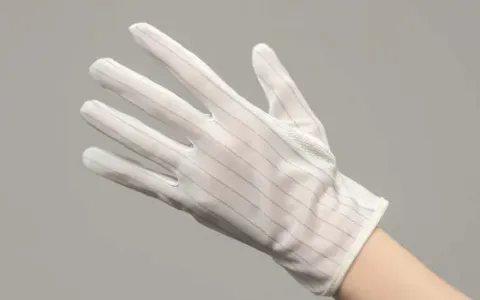
Antistatic gloves are protective or handling gloves designed to limit static charge buildup and help dissipate electrical charges in a controlled manner.
They are commonly used when workers handle static-sensitive components, precision products, electronic devices, or materials that must be protected from electrostatic discharge.
Unlike ordinary work gloves, antistatic gloves normally incorporate materials or structures that provide controlled electrical conductivity. Depending on the product, this may include conductive carbon fibers, conductive yarn, metallic fibers, or specially formulated coatings.
The objective is not to make the glove highly conductive like a metal wire. Instead, the glove should provide a controlled path that helps prevent excessive electrostatic charge from accumulating on the wearer or glove surface.
Antistatic gloves are therefore commonly used as one component of a broader ESD control system.
How Do Antistatic Gloves Work?
Static electricity is often generated by friction or contact and separation between different materials. Walking across a floor, handling plastic components, removing packaging, or even moving synthetic clothing can generate electrostatic charge.
If that charge suddenly transfers to an electronic component, the resulting electrostatic discharge may damage sensitive circuitry.
Antistatic gloves help manage this risk by incorporating static-dissipative or conductive materials into the glove structure.
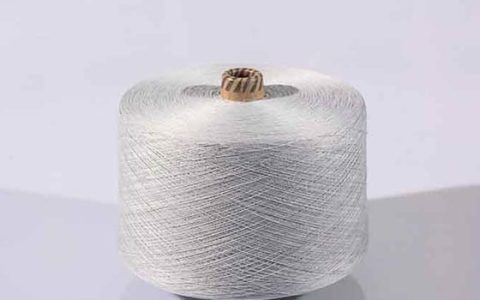
For example, a knitted glove may combine polyester or nylon fibers with conductive carbon yarn. The conductive network provides a path through which accumulated electrical charge can move rather than remaining concentrated on the glove surface.
The basic principle can be summarized as:
Static generation → conductive or dissipative glove structure → controlled charge dissipation → reduced risk of uncontrolled ESD
However, gloves do not work independently.
Effective ESD control normally requires the complete working environment to be considered, including:
antistatic clothing;
footwear;
flooring;
grounding equipment;
work surfaces;
humidity;
handling procedures;
grounding of personnel.
This is why an antistatic glove should be treated as one part of an overall electrostatic control system rather than as a standalone solution.
What Are Antistatic Gloves Made Of?
The construction of antistatic gloves varies according to their intended application.
Polyester and Nylon
Polyester and nylon are frequently used as the main textile fibers in lightweight antistatic gloves.
They provide advantages such as:
good flexibility;
lightweight construction;
durability;
comfortable fit;
suitability for fine assembly work.
However, conventional polyester or nylon alone does not necessarily provide the required static-dissipative performance. Conductive components are therefore commonly added to the textile structure.
Conductive Carbon Fiber or Yarn
Carbon-based conductive fibers are widely used in ESD and antistatic textiles.
They can be blended or knitted with conventional fibers to create conductive pathways throughout the glove.
This construction is particularly common in gloves designed for electronics assembly, semiconductor handling, precision manufacturing, and related applications.
Conductive and Metallic Fibers
Other conductive materials can also be incorporated into textile yarns depending on the required electrical properties.
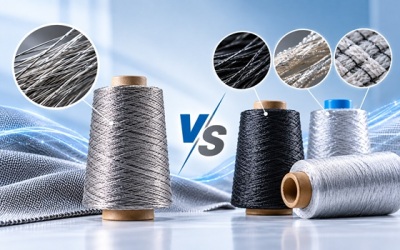
The construction of the conductive yarn—including fiber composition, conductive material content, yarn spacing, and textile structure—can influence the final static-dissipative performance.
PU Coatings
Many antistatic knitted gloves use polyurethane, or PU, coatings on the palm or fingertips.
The coating can improve:
grip;
abrasion resistance;
precision handling;
protection of components from direct skin contact.
For this reason, PU-coated antistatic gloves are widely used in electronic assembly and other applications requiring both ESD control and good finger dexterity.
What Are the Main Types of Antistatic Gloves?
Not all antistatic gloves are designed for the same purpose.
Understanding the main product types helps buyers match the glove to the working environment.
1. Knitted Antistatic Gloves
These gloves are usually made from polyester or nylon combined with conductive fibers.
Their lightweight and flexible construction makes them suitable for:
electronics assembly;
semiconductor handling;
component inspection;
precision manufacturing.
They may be uncoated when maximum breathability and flexibility are required.
2. PU-Coated Antistatic Gloves
PU-coated gloves combine a conductive knitted liner with a polyurethane coating on the fingertips or palm.
They provide additional grip and abrasion resistance while maintaining good dexterity.
Typical applications include PCB assembly, electronic component handling, inspection, testing, and precision production.
3. Antistatic Stretch Gloves
Antistatic stretch gloves are designed to provide a close fit around the hand and fingers.
A closer fit can improve tactile sensitivity when handling small or delicate components.
This makes them particularly useful in applications where workers need to combine static control with precise manual operations.
4. ESD Gloves
The terms "ESD gloves" and "antistatic gloves" are often used interchangeably, but buyers should pay attention to the actual tested electrical performance rather than relying only on product terminology.
An ESD glove is generally intended to operate within an electrostatic discharge control environment. Its material, resistance characteristics, and compatibility with the overall grounding system should therefore be verified for the intended application.
Antistatic Gloves vs. ESD Gloves: What Is the Difference?
There is considerable overlap between antistatic gloves and ESD gloves, which is why the terms are frequently confused.
In general, "antistatic" describes the ability of a material or product to reduce static generation or charge accumulation.
"ESD" usually refers more broadly to controlling electrostatic discharge within a defined working environment.
Therefore, an antistatic glove may be part of an ESD protection system, but buyers should not assume that every glove marketed as "antistatic" automatically meets the electrical performance requirements of a specific ESD program.
For professional industrial applications, the more useful questions are:
What electrical resistance has been tested?
Which test method was used?
What standard or customer specification applies?
How does the glove interact with other grounding measures?
Does performance remain stable during use?
Product data and test reports are more important than terminology alone.

Where Are Antistatic Gloves Used?
Antistatic gloves are used across industries where electrostatic charge can affect products, processes, or working conditions.
Electronics Manufacturing
Electronics is one of the most common applications.
Workers handling printed circuit boards, electronic assemblies, sensors, connectors, and other sensitive components may use antistatic gloves as part of the ESD control system.
The gloves also help prevent oils, sweat, and contaminants from the hands from contacting sensitive products.
Semiconductor Manufacturing
Semiconductor devices can be particularly sensitive to electrostatic discharge.
Antistatic or ESD-compatible gloves are therefore commonly used during wafer handling, chip manufacturing, assembly, inspection, and packaging.
Cleanrooms
Cleanroom environments often require control of both contamination and static electricity.
Low-linting antistatic gloves may be used together with cleanroom clothing, footwear, and other controlled-environment equipment.
However, cleanroom compatibility and antistatic performance are separate requirements. A glove intended for a cleanroom should be evaluated for particle generation, cleanliness, material compatibility, and ESD performance according to the actual application.
Precision Manufacturing
Antistatic gloves may also be used when assembling or handling precision instruments and small components where both cleanliness and static control are important.
Laboratories
Some laboratories use electrostatic-sensitive equipment, instruments, or samples.
Appropriate gloves can help reduce contamination while supporting the facility's broader static-control procedures.
Are Nitrile Gloves Antistatic?
Standard nitrile gloves should not automatically be assumed to be antistatic.
Nitrile is widely used because of its chemical resistance, puncture resistance, and disposable glove performance, but static characteristics depend on the specific formulation and product design.
Specialized nitrile gloves can be engineered for static-dissipative or ESD applications through material modification or other technologies.
Buyers should therefore check actual technical data rather than assuming that all nitrile gloves provide the same static-control performance.
For a more detailed explanation, see our guide on whether nitrile gloves are antistatic.
How to Choose the Right Antistatic Gloves
Choosing antistatic gloves requires balancing electrical performance with practical working requirements.
Important factors include:
Electrical Performance
Verify measured resistance or other relevant electrostatic performance rather than relying only on product descriptions.
Material
Polyester, nylon, carbon fiber, conductive yarn, PU coatings, and specialized disposable materials each provide different properties.
Dexterity
Precision assembly work may require thin, close-fitting gloves that allow workers to handle very small components.
Grip
Palm or fingertip coatings may improve handling performance when working with smooth components and tools.
Cleanliness
Semiconductor and cleanroom environments may require low-linting materials and controlled contamination levels.
Durability
Reusable industrial gloves should maintain their functional and mechanical properties throughout their intended service life.
Working Environment
The correct glove for electronics assembly may not be suitable for a chemical facility, cleanroom, or hazardous industrial environment.
For a more detailed selection process, refer to our guide on how to choose suitable antistatic gloves.
Frequently Asked Questions About Antistatic Gloves
What are antistatic gloves used for?
Antistatic gloves are used to reduce static charge buildup when handling electrostatic-sensitive products. Common applications include electronics manufacturing, semiconductor production, cleanrooms, laboratories, PCB assembly, and precision manufacturing.
Are antistatic gloves the same as insulated electrical gloves?
No. Antistatic gloves are intended to manage static electricity, while electrically insulating gloves are designed for protection against electrical voltage. These are fundamentally different applications.
Are all ESD gloves conductive?
ESD gloves use materials and constructions designed to control electrostatic charge, but their electrical properties vary. Buyers should verify measured resistance and applicable test requirements rather than relying only on labels such as "conductive" or "ESD."
Can antistatic gloves be washed?
Some reusable textile antistatic gloves can be washed, but cleaning procedures depend on the material and manufacturer instructions. Improper washing or contamination may affect glove performance.
How often should antistatic gloves be replaced?
There is no universal replacement interval. Replacement depends on wear, contamination, electrical performance, mechanical damage, cleaning cycles, and workplace requirements.
Conclusion
Antistatic gloves are designed to reduce static charge buildup and support controlled electrostatic dissipation in environments where ESD can affect products or production processes.
Most textile antistatic gloves combine conventional fibers such as polyester or nylon with conductive components such as carbon fibers or conductive yarns. Different constructions—including knitted gloves, PU-coated gloves, stretch gloves, and specialized ESD gloves—are available for different industrial requirements.
They are widely used in electronics manufacturing, semiconductor production, cleanrooms, precision manufacturing, and laboratories.
However, selecting antistatic gloves should not be based on the product name alone. Electrical performance, materials, dexterity, coating, cleanliness, durability, applicable standards, and compatibility with the overall ESD control system should all be considered.
For industrial buyers, the most effective approach is to identify the working environment and performance requirements first, then select and verify the glove based on relevant technical data and testing.
Related News
Read More >-
![How to Choose Cleanroom Clothing for Different Cleanroom Classes]()
How to Choose Cleanroom Clothing for Different Cleanroom Classes
Learn how to choose cleanroom clothing for ISO Class 5, 6, 7, and 8 environments, including garment types, fabric requirements, ESD protection, and testing.
-
![Cleanroom Clothing vs. Antistatic Clothing: What's the Difference?]()
Cleanroom Clothing vs. Antistatic Clothing: What's the Difference?
Compare cleanroom clothing vs. antistatic clothing, including key differences in fabric, ESD protection, contamination control, standards, and applications.
-
![How to Choose Stainless Steel Yarn for Conductive Textiles?]()
How to Choose Stainless Steel Yarn for Conductive Textiles?
Learn how to choose stainless steel yarn for conductive textiles. Compare fiber content, electrical resistance, yarn count, durability, and testing requirements.
-
![Stainless Steel Yarn vs. Conductive Yarn: What's the Difference?]()
Stainless Steel Yarn vs. Conductive Yarn: What's the Difference?
Compare stainless steel yarn with carbon and silver-coated conductive yarns. Explore differences in conductivity, durability, flexibility, and applications.
-
![How Does an Antistatic Jacket Work?]()
How Does an Antistatic Jacket Work?
Learn how an antistatic jacket works, how conductive yarn and antistatic fabric dissipate static charge, and what affects ESD protection performance.
-
![What Is an Antistatic Jacket?]()
What Is an Antistatic Jacket?
Learn what an antistatic jacket is, how it works, the materials used, key applications, ESD standards, and how to choose the right jacket for work.
-
![What Is Stainless Steel Yarn Used For?]()
What Is Stainless Steel Yarn Used For?
Discover what stainless steel yarn is used for, from antistatic and EMI shielding fabrics to smart textiles, heating, and protective clothing.
-
![What Is Stainless Steel Yarn?]()
What Is Stainless Steel Yarn?
What is stainless steel yarn? Learn about its conductivity, properties, types, applications, and uses in antistatic, ESD, and functional textiles.