



The Critical Role and Advanced Engineering of Laboratory Cleanroom Apparel
2026-01-12 15:49
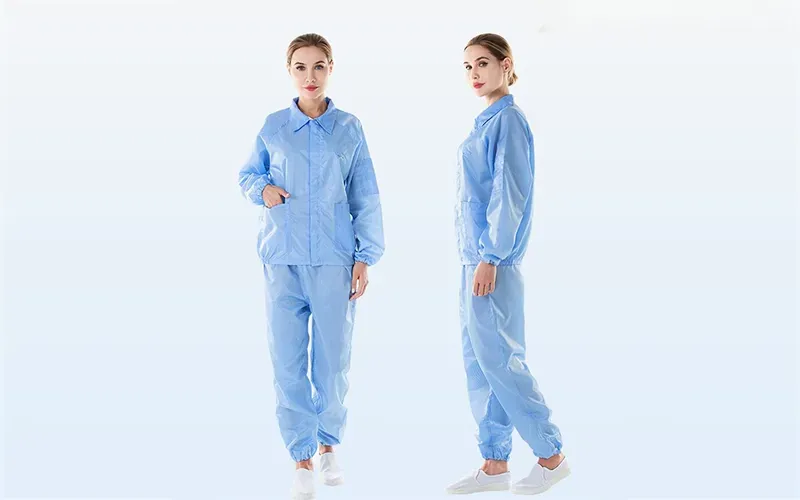
Laboratory cleanroom apparel serves as an essential barrier in controlled environments, designed to protect both sensitive processes from human contamination and the wearer from potential chemical or biological hazards. Unlike standard workwear, these garments are engineered to meet exceptionally stringent requirements for particle emission control, chemical resistance, electrostatic dissipation (ESD), and durability through repeated sterilization cycles. Their performance is critical in industries such as semiconductor manufacturing, pharmaceutical production, biotechnology, and precision optics, where the absence of microscopic contaminants or static discharge is paramount to product integrity, research validity, and operational safety. The effectiveness of these garments relies on a sophisticated integration of fiber science, fabric engineering, and garment design.
Material Science: Foundations of Barrier Protection and Purity
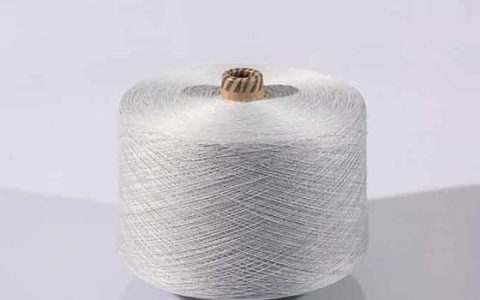
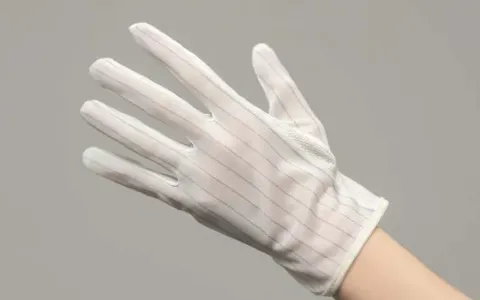
The selection of base fibers defines the core protective properties. Continuous filament polyester is the predominant material due to its naturally low linting properties, high tensile strength, and excellent resistance to many chemicals and sterilization methods (e.g., autoclaving, gamma irradiation). For applications requiring inherent anti-static or conductive properties, fibers incorporating carbon particles or carbon-loaded yarns are integrated into the fabric to create a permanent, non-leaching pathway for safely grounding electrostatic charges—preventing damage to microelectronics and mitigating ignition risks in flammable atmospheres. The fabric's particle barrier efficacy is further enhanced by using ultra-fine, continuous filament fibers, which minimize the shedding of fiber fragments and form a dense, mechanically filtering structure.
Fabric Construction and Finishing: Engineering the Functional Surface
The transformation of yarn into a protective fabric involves precise engineering. A tight plain weave or micro-denier knit construction is standard, creating a physical shield against particulate penetration. A critical advanced treatment is the application of a fluorocarbon-based durable water repellent (DWR) finish. This finish creates a low-surface-energy barrier on each fiber, causing liquids—including water, acids, and solvents—to bead up and roll off rather than be absorbed, thereby preventing the transport of liquid-borne contaminants. For the highest cleanliness classes, fabrics undergo specialized antistatic treatments and laser-cut sealing processes. These processes ensure that seams are bonded or sealed without loose threads or pores, maintaining the integrity of the protective barrier at every stitch point and eliminating common sources of particle generation.
Sustainability and Performance in Modern Cleanroom Garment Design
The industry is progressively integrating ecological responsibility with uncompromising performance. Leading manufacturers are adopting eco-efficient production methods, such as utilizing recycled polyester (rPET) from post-consumer sources for select garment components—provided it meets the required purity and performance benchmarks. Furthermore, innovations in finishing technologies, including low-emission application methods for DWR treatments, are reducing the environmental footprint of production. The core sustainability principle lies in manufacturing high-durability garments engineered to withstand 50 to over 100 industrial launderings and sterilization cycles without significant degradation in barrier performance. This durability dramatically reduces the total waste generated compared to disposable alternatives, aligning with the principles of a circular economy while fulfilling the rigorous technical specifications demanded by global standards such as ISO 14644 and IEST.
For over sixty years, CJTI has positioned itself as a premier vertically integrated manufacturer, uniquely mastering the complete value chain from specialized yarn development and high-performance fabric production to the precision cutting and sewing of finished technical garments. Our deep expertise across the entire functional textile process focuses on creating cleanroom apparel solutions that meet the most demanding standards of purity, protection, and durability. Rooted in a commitment to a green and sustainable production model, CJTI innovates to provide laboratory and cleanroom professionals with apparel that ensures critical environmental control while actively contributing to a more responsible and sustainable future for advanced manufacturing industries.
Related News
Read More >-
![How ESD Clothing Works: Principles, Materials, and Industrial Applications]()
How ESD Clothing Works: Principles, Materials, and Industrial Applications
This article explores the science behind ESD clothing, including its working principles, materials, and real-world applications across modern industries.
-
![Unveiling the Technology Behind Conductive and Anti-Static Yarns]()
Unveiling the Technology Behind Conductive and Anti-Static Yarns
-
![The Essential Science and Innovation of Flame Retardant Yarns]()
The Essential Science and Innovation of Flame Retardant Yarns
-
![What's the Difference Between Cut Resistant and Stab Resistant Clothing]()
What's the Difference Between Cut Resistant and Stab Resistant Clothing
Learn the difference between cut resistant clothing and stab resistant clothing. Discover materials, key features, and how to choose the right protection for your application.
-
![What is Aramid Yarn?]()
What is Aramid Yarn?
Discover what aramid yarn is, including its properties, types, and applications in flame retardant fabrics and industrial textiles. Learn how aramid fiber enhances strength and heat resistance.
-
![Understanding Flame Resistant Fabrics]()
Understanding Flame Resistant Fabrics
Explore what flame resistant fabrics are, how they work, how they differ from other fire protection materials, and how they are used across industries.
-
![What Fabrics Are Flame Retardant?]()
What Fabrics Are Flame Retardant?
Learn what flame retardant fabrics are, how they work, and which materials offer the best fire protection. Explore inherently flame resistant fabrics, FR cotton, and industrial applications.
-
![The Specialized Science of Beekeeping Suits: Engineering Protection and Comfort for Apiarists]()
The Specialized Science of Beekeeping Suits: Engineering Protection and Comfort for Apiarists