



Unveiling the Technology Behind Conductive and Anti-Static Yarns
2025-12-16 15:15
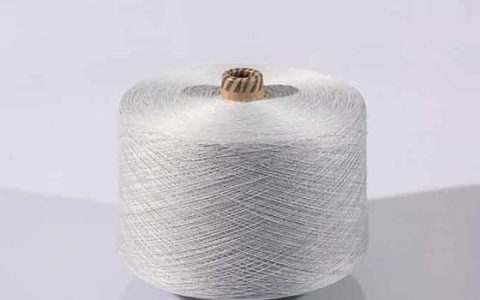
Conductive yarns represent a sophisticated fusion of textile tradition and advanced materials science, engineered to integrate electrical functionality into flexible fabrics. These specialized yarns are designed to carry low-current electricity or safely dissipate electrostatic charges, addressing critical challenges in fields ranging from personal protective equipment (PPE) to wearable technology. Unlike conventional insulating yarns, conductive yarns incorporate elements that provide a controlled path for electrical flow, transforming passive fabrics into interactive and safety-critical systems.
Defining Anti-Static Yarns: Controlled Dissipation over Discharge
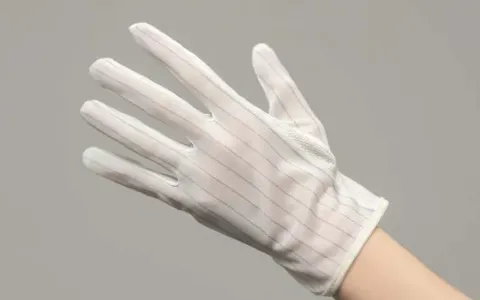
A primary application of this technology is in Anti-Static Yarns. A crucial distinction lies between “conductive” and “anti-static” properties. While both manage electrical charge, anti-static yarns are specifically engineered to prevent the sudden, uncontrolled discharge known as Electrostatic Discharge (ESD), which can damage sensitive electronics or ignite flammable atmospheres. They achieve this not by being highly conductive like a metal wire, but by possessing a stable, intermediate level of electrical resistance. This allows electrostatic charges to dissipate slowly and safely to the ground, preventing dangerous accumulation. These yarns are typically produced by embedding carbon-based particles, stainless steel microfibers, or conductive polymer coatings into fibers during spinning. They are indispensable in cleanroom garments, protective workwear for petrochemical or pharmaceutical industries, and specialty flooring for data centers, where static control is a fundamental safety and operational requirement.
Manufacturing Techniques and Evolving Innovation
The production of these functional yarns employs several specialized techniques. A common method is intimate blending, where conductive filaments (such as fine stainless steel or silver-coated polyamide) are uniformly blended with traditional fibers (like polyester or cotton) during the spinning process, creating a yarn with consistent electrical properties. Another advanced technique is core-spinning, where a conductive filament serves as a central core, entirely sheathed by conventional fibers for enhanced comfort and processability. The selection of the conductive element is pivotal: metallic materials (e.g., silver, copper) offer high conductivity for applications like data transmission or heating elements, while carbon-based materials (e.g., carbon black) are often favored for cost-effective, durable static dissipation. Ongoing innovation focuses on improving wash durability, maintaining electrical performance under mechanical stress, and enhancing the comfort and aesthetics of the final fabric to meet broader market demands.
Diverse Applications: From Industrial Safety to Smart Wearables
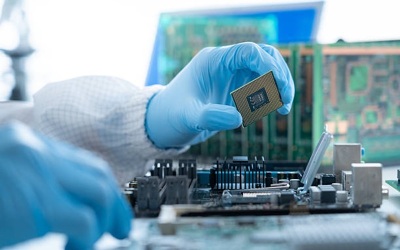
The utility of conductive and anti-static yarns spans multiple critical sectors. In industrial safety, they form the foundation of ESD-protective workwear, preventing hazardous sparks in explosive environments. In electronics manufacturing, components like wrist straps and protective garments made with these yarns safeguard microchips from ESD damage during assembly. Beyond protection, they are key enablers of smart textiles: when integrated into fabrics via weaving or knitting, they can function as flexible sensors for biometric monitoring (e.g., heart rate, muscle activity), as soft circuitry for wearable devices, or as low-voltage heating elements for therapeutic apparel. This convergence of functionality and textile versatility is pioneering new frontiers in healthcare, sports science, and defense technology.
For over six decades, CJTI has established itself as a premier vertically integrated manufacturer, mastering the complete process from specialized yarn development to high-performance fabric production. With deep expertise across the functional textile chain, CJTI is at the forefront of innovating solutions such as advanced conductive and anti-static yarn systems. Our commitment extends beyond technical performance to a responsible green and sustainable production model, ensuring that our cutting-edge protective and smart textile solutions meet the highest standards of both technological efficacy and environmental stewardship.
Related News
Read More >-
![What Is Stainless Steel Yarn Used For?]()
What Is Stainless Steel Yarn Used For?
Discover what stainless steel yarn is used for, from antistatic and EMI shielding fabrics to smart textiles, heating, and protective clothing.
-
![What Is Stainless Steel Yarn?]()
What Is Stainless Steel Yarn?
What is stainless steel yarn? Learn about its conductivity, properties, types, applications, and uses in antistatic, ESD, and functional textiles.
-
![What Are Flame Retardant Textiles?]()
What Are Flame Retardant Textiles?
Learn what flame retardant textiles are, how they work, key fabric types, applications, standards, and how to choose flame-resistant fabrics for protective clothing.
-
![What is Cotton Flame Retardant Fabric?]()
What is Cotton Flame Retardant Fabric?
Explains what cotton flame retardant fabric is, how it works, how it differs from inherent FR materials, where it is used, what standards buyers should consider, and how to select the right fabric for a protective clothing program.
-
![Which is Better, Aramid or Kevlar Fabric?]()
Which is Better, Aramid or Kevlar Fabric?
Compare aramid fabric vs Kevlar fabric, including strength, flame resistance, applications, and key differences to choose the right protective material.
-
![What Is Aramid Fabric?]()
What Is Aramid Fabric?
Learn what aramid fabric is, its key properties, the differences between meta aramid fabric and para aramid fabric, common applications, and how to choose the right flame retardant fabric for industrial protective clothing.
-
![What is Level 5 Cut Resistant Clothing?]()
What is Level 5 Cut Resistant Clothing?
-
![Why the Electronics Industry Relies on Antistatic Fabric]()
Why the Electronics Industry Relies on Antistatic Fabric