



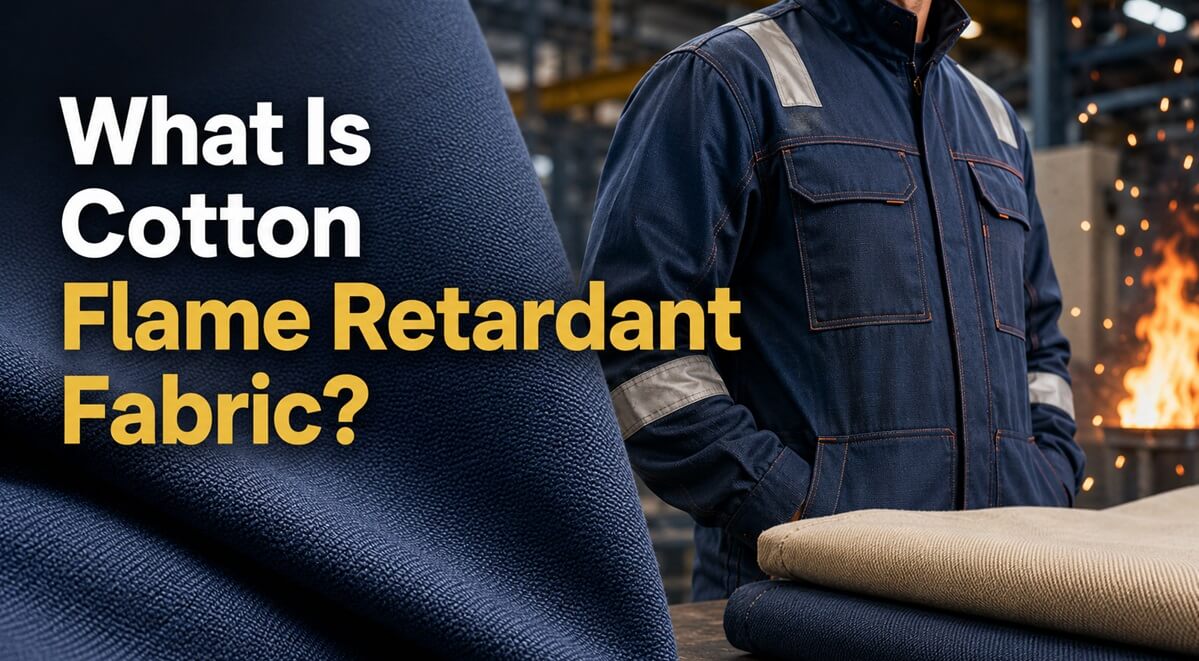
What is Cotton Flame Retardant Fabric?
2026-08-21 14:48
Cotton is widely valued in workwear because it is soft, breathable, moisture-absorbent, and comfortable for long working hours. However, ordinary cotton is combustible. When exposed to flame, untreated cotton can ignite and continue burning even after the ignition source is removed. For workers in industries such as oil and gas, electrical utilities, welding, petrochemicals, metal processing, and manufac
turing, this creates a serious safety concern.
Cotton flame retardant fabric is designed to address this problem. It combines the natural comfort of cotton with specialized flame-retardant technolog
y that helps reduce ignition, flame spread, and continued burning. Depending on the construction and treatment system, these fabrics can also be engineered to provide protection against additional workplace risks such as electric arc exposure, static electricity, heat, welding hazards, and limited chemical splash.
As demand for safer and more comfortable protective clothing grows, cotton-based flame retardant fabric remains an important material for industrial workwear. At the same time, improvements in finishing chemistry, fabric construction, lightweight protection, multi-hazard performance, and garment design are changing how buyers evaluate modern FR fabrics.
This guide explains what cotton flame retardant fabric is, how it works, how it differs from inherent FR materials, where it is used, what standards buyers should consider, and how to select the right fabric for a protective clothing program.
What Is Cotton Flame Retardant Fabric?
Cotton flame retardant fabric is a cotton-based textile that has been specially treated or engineered to reduce its flammability and stop or significantly limit continued burning after the ignition source is removed.
The distinction between ordinary cotton and FR-treated cotton is critical.
Untreated cotton is not naturally flame resistant. Cotton fibers are cellulose-based and can readily burn when exposed to sufficient heat or flame. By applying durable flame-retardant chemistry during textile finishing, manufacturers can alter the way the cotton reacts during combustion.
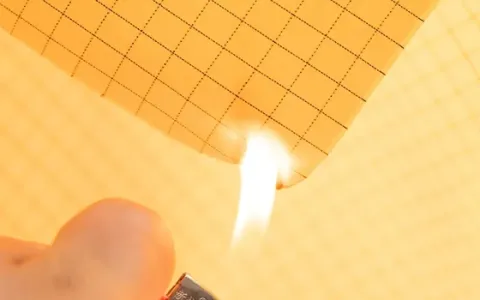
Instead of continuing to support flame propagation, properly treated fabric tends to char and self-extinguish after the flame source is removed.
This is why the terms flame retardant and flame resistant are sometimes used differently in technical textile discussions. Cotton Incorporated, for example, distinguishes a fire-retardant chemical from a fire-resistant textile substrate that burns slowly or self-extinguishes after an ignition source is removed.
In commercial protective textiles, terms such as fr cotton fabric, FR-treated cotton, flame-resistant cotton, and cotton flame resistant fabric are commonly used to describe materials intended for protective workwear.
However, buyers should never rely on terminology alone. What matters is the tested performance of the finished fabric and garment under the required safety standard.
How Does Cotton Flame Retardant Fabric Work?
Most cotton flame retardant fabric achieves its protective properties through a durable chemical treatment applied during fabric finishing.
The exact chemistry and processing system vary by manufacturer, but the basic purpose is similar: change the combustion behavior of cellulose.
When untreated cotton is heated strongly enough, the cellulose decomposes and produces combustible gases. These gases can feed the flame, allowing the fabric to continue burning.
A durable FR treatment is designed to encourage the cotton to form a stable char rather than producing as much combustible material.
This char layer can help reduce:
flame propagation;
continued afterflame;
heat transfer;
fabric destruction;
secondary burn risk.
The treatment must also be properly bonded or fixed to the fibers so that the required protective performance can survive the intended laundering cycles.
This durability is especially important for industrial workwear. Protective clothing may be washed repeatedly during its service life, sometimes under demanding industrial laundering conditions.
A reputable flame retardant fabric manufacturer therefore evaluates much more than the result on a new piece of fabric. Testing may be performed after repeated washing to verify that the fabric continues meeting specified performance requirements.
Cotton Incorporated maintains technical resources specifically addressing fabric flame-retardant treatment, flame-resistant cotton fabrics, and flammability testing, illustrating how established the engineering and testing of FR cotton has become within the textile industry.
Cotton Flame Retardant Fabric vs. Inherent FR Fabric
One of the most common questions in industrial protective clothing is whether treated cotton or an inherent FR material is better.
There is no universal answer because they serve different performance and cost requirements.
Treated Cotton FR Fabric
In treated fr cotton fabric, the original cotton fiber is not inherently flame resistant. Flame-resistant performance is created through a finishing process.
Its major advantages often include:
natural cotton hand feel;
good breathability;
good moisture absorption;
familiar workwear appearance;
wide availability of fabric weights and weaves;
good dyeability;
competitive cost compared with many high-performance fibers.
It is therefore widely used for industrial coveralls, jackets, trousers, shirts, uniforms, and other daily protective workwear.
Inherent FR Fabric
In an inherent FR material, flame resistance comes from the chemical structure of the fiber itself.
Examples can include modacrylic and aramid fibers.
Because protection is built into the fiber, it does not depend on a surface finishing treatment.
Inherent fabrics are often selected for demanding applications requiring high thermal performance, low fabric weight, extended protective service life, or specialized hazard combinations.
However, they can be considerably more expensive than conventional treated cotton.
The right choice therefore depends on exposure conditions, garment lifetime, comfort expectations, required certification, and total lifecycle cost—not simply whether the fabric is treated or inherent.
Cotton FR Fabric vs. Aramid Fabric
Aramid is another important category in protective textiles.
Materials made with aramid yarn are widely used when high heat resistance, mechanical strength, or advanced thermal protection is required.
Meta-aramid and para-aramid fibers have different performance characteristics and are often blended with other fibers to achieve specific combinations of flame resistance, durability, strength, antistatic performance, and comfort.
Compared with cotton FR fabric, aramid-based materials generally offer advantages such as:
inherent flame resistance;
high thermal stability;
excellent strength-to-weight performance;
good resistance to high-temperature environments;
potential for high levels of thermal protection at relatively low fabric weights.
Cotton FR fabrics, however, remain attractive for applications where comfort, cost efficiency, moisture management, familiar garment feel, and daily workwear practicality are important.
In some advanced textile constructions, aramid yarn can also be incorporated into blended systems to increase strength or thermal performance while balancing comfort and price.
As a result, the industry is increasingly moving away from the simplistic question of "cotton or aramid?" and toward application-specific fiber engineering.
Key Benefits of Cotton Flame Retardant Fabric
1. Comfortable for Long Working Hours
Comfort is a critical safety factor.
Protective clothing only works effectively if employees wear it correctly. Fabrics that are extremely heavy, stiff, or hot can make long shifts uncomfortable and may discourage proper PPE use.
Cotton offers a soft hand, moisture absorption, and good next-to-skin comfort, making cotton flame retardant fabric particularly useful for workers who need FR garments throughout an entire shift.
2. Breathability
Air permeability and moisture management become increasingly important in warm industrial environments.
Modern FR textile development is therefore focusing not only on meeting protection standards but also on reducing heat burden.
Recent industry product development shows growing interest in lighter, softer FR fabrics and fabrics that combine protection with better flexibility and airflow. At the 2025 A+A safety exhibition, for example, suppliers highlighted lightweight, stretch, and multi-risk FR fabrics as areas receiving strong buyer attention.
3. Wide Range of Fabric Structures
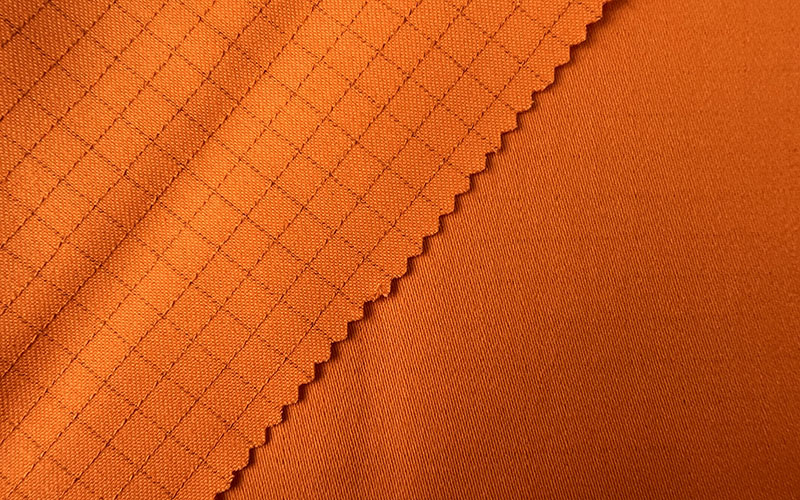
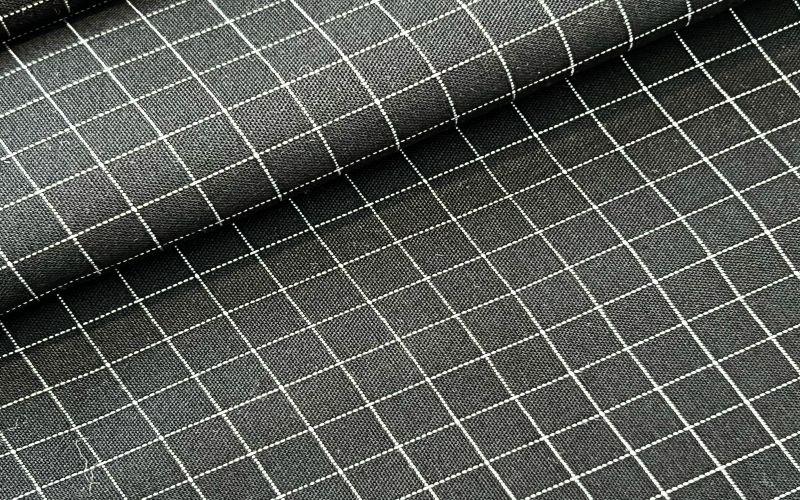
Cotton flame retardant fabric can be manufactured in numerous textile constructions, including:
twill;
satin;
canvas;
ripstop;
plain weave;
knit structures.
This makes it easier to optimize fabric weight, strength, appearance, flexibility, and protection for specific garments.
4. Flexible Fabric Weight
Different climates and industries require different fabric weights.
A lightweight FR shirt for a hot environment has very different requirements from a heavy welding jacket.
Cotton FR fabrics can therefore be developed in different GSM ranges depending on the intended application.
Higher fabric weight does not automatically mean better overall protection. Fabric composition, treatment technology, construction, layering, air gaps, garment design, and specific test results all influence performance.
5. Cost-Effective Protective Solution
For many industrial applications, treated cotton offers an effective balance between protection, comfort, and procurement cost.
This is particularly important for organizations purchasing large volumes of uniforms or replacing garments on a regular schedule.
Where Is Cotton Flame Retardant Fabric Used?
Cotton flame retardant fabric is commonly used in industries where employees may encounter flash fire, heat, flame, sparks, electric arc hazards, or related industrial risks.
Typical applications include:
Oil and Gas
Workers in upstream, midstream, and downstream operations may face short-duration thermal hazards.
FR coveralls, jackets, trousers, and shirts are therefore common in:
drilling operations;
oilfields;
refineries;
pipelines;
petrochemical facilities.
Electrical Utilities
Workers performing electrical maintenance may require arc-rated clothing selected according to the calculated or assessed arc hazard.
Flame resistance is essential because ordinary clothing can ignite during thermal exposure and contribute to burn injuries.
Importantly, FR and arc-rated are not automatically interchangeable terms. Electrical PPE must meet the applicable arc-rating requirements for the specific hazard.
Welding and Metalworking
Welders may encounter sparks, molten metal droplets, radiant heat, and flame.
Fabric construction and garment design must therefore be selected according to the actual welding process and relevant protective standard.
Petrochemical and Chemical Industries
Workers may face combinations of flame, static electricity, chemical splash, and heat exposure.
This has contributed to growing demand for multi-standard protective materials.
Manufacturing
Foundries, automotive factories, machinery plants, and other manufacturing operations may require FR clothing for employees working near furnaces, hot surfaces, electrical equipment, or ignition sources.
How Durable Is FR Cotton Fabric After Washing?
Wash durability is one of the most important purchasing considerations.
Properly manufactured cotton flame retardant fabric is engineered so that its protective treatment remains effective for the defined product life and laundering conditions.
However, actual performance depends on:
FR treatment technology;
washing temperature;
detergent chemistry;
industrial versus domestic laundering;
bleach exposure;
fabric wear;
contamination;
garment maintenance.
Buyers should ask suppliers how many laundering cycles were used before certification testing and which laundering method was followed.
A statement such as "50 washes" is only meaningful when the corresponding wash standard, temperature, detergent, and post-wash test results are understood.
This is especially important when comparing quotations from different suppliers.
What Are the Latest Trends in Cotton Flame Retardant Fabric?
The FR textile market is increasingly moving beyond basic flame resistance.
Lighter Fabrics With High Protection
Heavy protective clothing can contribute to thermal discomfort and fatigue.
Modern fabric development therefore aims to achieve required protection at lower fabric weights through improved yarn structures, fiber blends, finishing technology, and fabric engineering.
Recent commercial FR developments reflect this movement toward lighter and softer fabrics designed for long-duration wear.
Multi-Hazard Protection
Workers rarely face only one hazard.
A petrochemical worker, for example, may need flame resistance, antistatic protection, arc protection, and limited chemical splash resistance.
Modern flame retardant fabric development increasingly combines multiple functions within one fabric rather than requiring separate clothing systems for every risk. Current FR workwear collections increasingly emphasize combinations of flame, arc, antistatic, chemical, and high-visibility performance.
Improved Mobility
Stretch and ergonomic workwear are becoming increasingly important.
Protective workers need to climb, kneel, reach, and operate machinery. Fabric developers are therefore investigating constructions that improve flexibility without compromising required FR performance.
Better Moisture and Thermal Comfort
Moisture management is another growing development area.
Cotton already provides useful moisture absorption, while textile finishing and fabric construction can further improve drying, airflow, and wearer comfort.
The broader cotton textile industry is actively developing moisture-management, stretch, durability, and water-repellent technologies, demonstrating how performance engineering is increasingly being added to traditionally comfortable cotton materials.
Greater Focus on Lifecycle Performance
Purchasers increasingly evaluate not only purchase price but also durability, laundering performance, replacement frequency, and worker acceptance.
An inexpensive fabric that deteriorates quickly may ultimately cost more than a better-performing material with a longer service life.
This makes verified wash durability increasingly important when selecting fr cotton fabric.
How to Choose the Right Cotton Flame Retardant Fabric
Selecting an FR fabric should begin with hazard assessment rather than fabric price.
Buyers should consider the following factors.
Identify the Hazard
Determine whether workers face:
flash fire;
electric arc;
welding heat;
molten metal;
radiant heat;
static electricity;
chemical splash;
multiple hazards.
Determine the Required Standard
Specify which certification or test method is required in the destination market.
Do not simply request "FR fabric."
A better sourcing specification would include the fabric composition, weight, required safety standard, wash durability, garment application, and intended working environment.
Select the Appropriate Fabric Weight
Hot climates may require lightweight materials, while certain heavy-duty operations may need heavier fabrics.
The ideal solution balances protection with worker comfort.
Consider Mechanical Durability
FR performance alone is insufficient if the garment tears rapidly during industrial use.
Review:
tensile strength;
tear strength;
abrasion resistance;
dimensional stability;
seam performance.
Evaluate Wash Performance
Ask whether test results were obtained before or after laundering and how many wash cycles were performed.
Request Technical Documentation
A qualified supplier should be able to provide relevant documentation such as:
fabric specification sheets;
composition information;
GSM;
test reports;
certification information;
washing instructions;
performance data.
How to Select a Reliable Flame Retardant Fabric Manufacturer
Choosing the right flame retardant fabric manufacturer is just as important as choosing the fiber composition.
Protective fabrics involve chemistry, textile engineering, quality control, testing, and compliance. Small differences in finishing consistency can affect the performance of the finished material.
When evaluating suppliers, buyers should consider:
experience in functional textiles;
in-house research and development capabilities;
quality-management systems;
access to testing laboratories;
knowledge of international FR standards;
batch consistency;
traceability;
fabric customization capabilities;
technical support;
third-party certification.
A capable manufacturer should also be able to explain why a particular material is recommended.
For example, the supplier may recommend 100% treated cotton for comfort-focused industrial workwear, a cotton/nylon blend when greater mechanical durability is required, or an aramid yarn-based fabric for more demanding thermal environments.
The recommendation should always be driven by the end-use hazard.
Frequently Asked Questions About Cotton Flame Retardant Fabric
Is 100% cotton flame resistant?
Ordinary 100% cotton is not flame resistant. Cotton needs appropriate FR treatment or engineering before it can be used as certified flame-resistant protective material.
Can flame retardant treatment wash out of cotton?
Durable industrial FR treatments are designed to withstand repeated laundering when washed according to the recommended procedure. Actual durability depends on treatment chemistry, certification requirements, garment care, and laundering conditions.
Always review the manufacturer's test documentation rather than assuming every treated fabric provides the same wash durability.
Is cotton FR better than aramid?
Neither material is universally better.
Cotton FR often provides excellent comfort and cost efficiency for general industrial protective clothing. Aramid-based materials offer inherent thermal resistance and can deliver strong performance at lower fabric weights in demanding environments.
Selection should depend on hazard level, standards, garment use, expected lifetime, and budget.
Is flame retardant fabric the same as arc-rated fabric?
No.
An FR fabric is designed to resist ignition and continued burning, while an arc-rated fabric has undergone specific electric-arc testing and is assigned an arc rating according to relevant standards.
All arc-rated clothing must provide suitable flame-resistant performance, but not every FR fabric automatically qualifies as arc-rated clothing.
What industries commonly use FR cotton fabric?
Fr cotton fabric is widely used in oil and gas, petrochemical, electrical utilities, welding, metal processing, construction, transportation, manufacturing, and other industrial workplaces where flame or thermal hazards exist.
Final Thoughts
Cotton flame retardant fabric remains one of the most practical materials for industrial protective clothing because it combines the familiar comfort of cotton with engineered flame-resistant performance.
Its value goes beyond simply making cotton more difficult to burn.
Modern cotton-based flame retardant fabric can be engineered around specific requirements for fabric weight, breathability, mechanical strength, wash durability, electric-arc performance, antistatic properties, welding protection, and multi-hazard applications.
At the same time, protective textile development is increasingly focused on lighter fabrics, improved mobility, better thermal comfort, and multi-standard protection. These trends are pushing manufacturers to optimize the entire textile system—from fiber and aramid yarn blends to weaving, finishing, testing, and garment engineering.
For buyers, the most important principle is therefore simple: do not select FR clothing based on the words "100% cotton," "cotton flame resistant," or "fr cotton fabric" alone.
Start with the workplace hazard. Identify the required standard. Review tested performance after laundering. Consider fabric comfort and mechanical durability. Then work with an experienced flame retardant fabric manufacturer capable of matching fabric construction and protection level to the actual end-use environment.
When these factors are evaluated together, cotton flame retardant fabric can provide an effective balance of protection, comfort, durability, and cost for demanding industrial workwear applications.
Related News
Read More >-
![Which is Better, Aramid or Kevlar Fabric?]()
Which is Better, Aramid or Kevlar Fabric?
Compare aramid fabric vs Kevlar fabric, including strength, flame resistance, applications, and key differences to choose the right protective material.
-
![What Is Aramid Fabric?]()
What Is Aramid Fabric?
Learn what aramid fabric is, its key properties, the differences between meta aramid fabric and para aramid fabric, common applications, and how to choose the right flame retardant fabric for industrial protective clothing.
-
![What is Level 5 Cut Resistant Clothing?]()
What is Level 5 Cut Resistant Clothing?
-
![Why the Electronics Industry Relies on Antistatic Fabric]()
Why the Electronics Industry Relies on Antistatic Fabric
-
![Why Antistatic Fabric Is Essential in Pharmaceutical Manufacturing]()
Why Antistatic Fabric Is Essential in Pharmaceutical Manufacturing
Explore why antistatic fabric has become an essential material in pharmaceutical manufacturing, how it works, its advantages over ordinary fabrics, and what buyers should consider when selecting pharmaceutical workwear.
-
![Top 10 Industries That Use Antistatic Fabric]()
Top 10 Industries That Use Antistatic Fabric
Discover the top 10 industries that use antistatic fabric, from electronics and pharmaceuticals to food processing, and learn how it improves safety and quality.
-
![What are Specialty Fabrics?]()
What are Specialty Fabrics?
Discover what specialty fabrics are, their key features, materials, and industrial applications. Explore innovations in functional fabric, flame retardant fabric, antistatic fabric, cut resistant fabric, and sustainable textile technologies.
-
![Cleanroom Clothing: The Ultimate Guide for Controlled Environments]()
Cleanroom Clothing: The Ultimate Guide for Controlled Environments
Learn everything about cleanroom clothing, including garment types, antistatic materials, ESD protection, key applications, and how to choose the right cleanroom garments for controlled environments.