



The Science of Static and Why It Matters in Workwear
2025-12-01 10:34
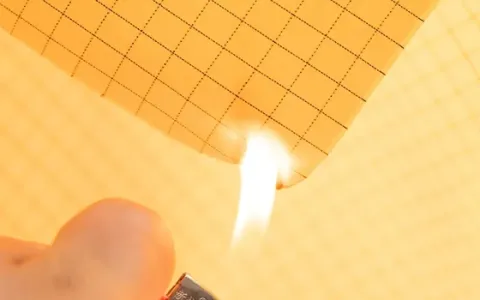
Static electricity, often perceived as a minor nuisance in daily life, poses a significant threat in industrial environments. It is generated primarily through the triboelectric effect, where charge transfer occurs when two materials contact and then separate. In sectors like electronics manufacturing, chemical processing, and petroleum refining, an uncontrolled electrostatic discharge (ESD) can ignite flammable substances or instantly destroy sensitive electronic components.
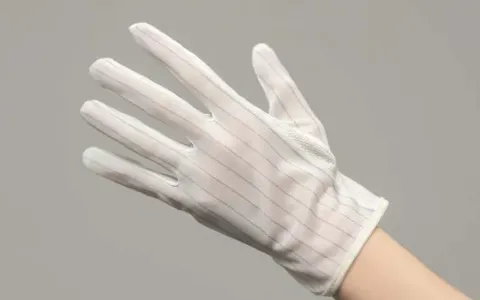
The propensity of a material to generate static electricity is closely tied to its position in the triboelectric series. Synthetic fibers like polyester and acrylic have a high tendency to acquire a negative charge and are prominent on "static blacklists," whereas natural fibers such as cotton and linen are more balanced and less prone to static accumulation. The fundamental role of anti-static workwear is to interrupt this dangerous process, providing a controlled path for static dissipation to ensure both workplace safety and product integrity.
Engineering Principles Behind Anti-Static Fabrics
The effectiveness of anti-static fabrics is not achieved through a single method but via sophisticated engineering. The two primary technological approaches involve incorporating conductive fibers or applying specialized chemical finishes.
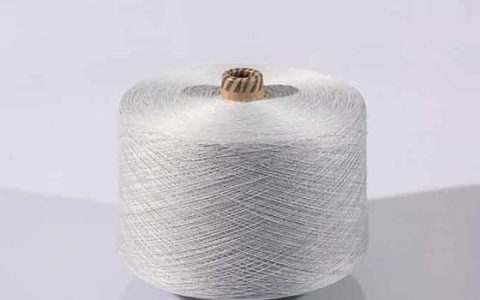
Conductive Fiber Integration: This method involves weaving carbon-based or metal fibers (such as stainless steel) directly into the fabric structure during production. These fibers create a continuous network of conductive pathways throughout the garment, allowing electrostatic charges to be safely and rapidly dissipated away from the wearer, often to a grounding point.
Chemical Finishes: Alternatively, standard textiles like polyester can be treated with anti-static agents. These chemical coatings work by increasing the hygroscopicity (moisture-attracting) property of the fiber surface, which enhances conductivity and prevents charge build-up. However, this method may have limitations in durability, as the protective effect can diminish with repeated laundering.
The performance of these engineered fabrics is rigorously measured against international standards like the EN 1149 series, which specifies critical parameters for surface resistivity and charge decay time to ensure reliable protection.
A Detailed Look at Anti-Static Fabric Types and Composition
Anti-static protective garments are categorized based on their material composition and intended application, each offering a distinct balance of protection, durability, and comfort.
| Fabric Type | Key Composition | Primary Characteristics | Common Applications |
|---|---|---|---|
| Conductive Fiber Blends | Polyester/Cotton blended with carbon or metal fibers | Dissipates charge via conductive pathways; durable; good breathability | Electronics manufacturing; Semiconductor plants |
| Anti-Static Polyester | Polyester with anti-static chemical treatment | Cost-effective; good abrasion resistance; performance may decrease with washes | General electronics assembly; Laboratories |
| Cleanroom Fabrics | Polyester filament with carbon conductive threads | Combines anti-static with low particle shedding for ultra-clean environments | Biopharmaceuticals; Microelectronics; Aerospace |
| Metal Fiber Blends | Stainless steel or silver fibers blended with cotton/polyester | Excellent conductivity; high durability; higher cost | Military; Petrochemical; High-risk environments |
Application-Specific Solutions and Industry Standards
Selecting the appropriate anti-static fabric is critical and depends entirely on the specific risks and requirements of the industrial environment.
In electronics and semiconductor manufacturing, the focus is on preventing ESD damage to delicate components. Garments must ensure that surface resistance remains within a safe range, typically 10^5 to 10^9 ohoms.
The petrochemical and oil & gas industries face the dual hazards of static sparks and fire. Here, workwear must integrate anti-static properties with inherent flame resistance (FR) to prevent catastrophic explosions.
For pharmaceutical and biotechnology production, the priority is protecting the product from contamination. Anti-static garments for these sectors are designed to be low-linting (or "shed-free") to maintain strict cleanliness standards in controlled environments.
Advancing Workplace Safety Through Six Decades of Anti-Static Fabric Innovation
With over six decades of specialized experience, CJTI has established itself as a pioneer in the development and manufacturing of advanced anti-static fabrics. The company's deep expertise allows it to engineer solutions that meet the precise protective requirements of diverse industries, from electronics to oil and gas. CJTI's fabrics are designed to comply with rigorous international standards, ensuring consistent performance and reliability.
Beyond technical excellence, CJTI integrates green manufacturing principles into its long-standing practice. As a vertically integrated production facility, the company actively implements sustainable measures—including reducing water consumption, minimizing chemical usage, and promoting circular economy initiatives—thereby offering customers high-performance protective solutions that align with modern environmental responsibilities.
Related News
Read More >-
![CJTI Debuts at 139th Canton Fair Phase 3: Bringing Functional Textile Innovations to Global Buyers]()
CJTI Debuts at 139th Canton Fair Phase 3: Bringing Functional Textile Innovations to Global Buyers
-
![CJTI Live at Techtextil 2026: Showcasing Innovation in Functional Textiles]()
CJTI Live at Techtextil 2026: Showcasing Innovation in Functional Textiles
CJTI is currently exhibiting at Techtextil 2026, one of the world’s leading trade fairs for technical textiles and nonwovens, taking place from April 21 to 24, 2026 in Frankfurt am Main.
-
![Invitation to the 139th Canton Fair: Discover CJTI's Professional Protective Workwear Solutions]()
Invitation to the 139th Canton Fair: Discover CJTI's Professional Protective Workwear Solutions
-
![CJTI to Exhibit at Techtextil 2026 in Frankfurt]()
CJTI to Exhibit at Techtextil 2026 in Frankfurt
-
![CJTI Demonstrates Sustainable Manufacturing Leadership with Certified Eco-Friendly Textile Breakthrough]()
CJTI Demonstrates Sustainable Manufacturing Leadership with Certified Eco-Friendly Textile Breakthrough
-
![CJTI Shines at Canton Fair: Functional Fabrics Steal the Show with Tech-Driven Display]()
CJTI Shines at Canton Fair: Functional Fabrics Steal the Show with Tech-Driven Display
-
![Your Invitation to Connect with Excellence: Visit CJTI at the 138th Canton Fair]()
Your Invitation to Connect with Excellence: Visit CJTI at the 138th Canton Fair
-
![Join Us at the 138th Canton Fair – Discover CJTI's Advanced Protective Wear]()
Join Us at the 138th Canton Fair – Discover CJTI's Advanced Protective Wear
We are thrilled to extend a warm invitation to you for the 138th China Import and Export Fair (Canton Fair), where CJTI will showcase our latest innovations in protective workwear. As a leading manufacturer with a strong focus on quality, technology, and sustainability, we invite you to visit us at Booth 12.2J10-12, Area B, to explore our cutting-edge solutions designed to meet the highest standards of safety, comfort, and environmental responsibility.