



Is Your ESD Fabric Really Antistatic?
2026-10-27 08:06
Imagine this: you’re walking through a pristine semiconductor fabrication facility, the air filtered to remove even the tiniest particles. Suddenly, a technician brushes against a workstation, and a nearly imperceptible spark jumps from their sleeve to a sensitive component. That tiny discharge—just a few hundred volts—could silently destroy a $50,000 wafer or corrupt critical data in a server farm. In high-tech manufacturing, static electricity isn’t just a nuisance; it’s a multi-billion-dollar threat. And the frontline defense? Antistatic ESD fabric. But here’s the unsettling truth: not all ESD fabrics are created equal. Many products on the market claim to be antistatic, yet they fail under real-world conditions, leaving your products, your data, and your reputation vulnerable. So, is your ESD fabric truly antistatic? In this deep dive, we’ll expose the hidden weaknesses of conventional ESD fabrics, explore the technical differentiators that separate genuine protection from false security, and show you how Jiangsu Textile Research Institute Inc. is redefining the standard with fabrics engineered for the most demanding environments. Whether you’re an engineer specifying materials for a cleanroom or a procurement manager sourcing for aerospace assembly, this article will arm you with the knowledge to make informed decisions—and maybe even rethink everything you thought you knew about ESD protection.
Industry Pain Points: Where Conventional ESD Fabrics Fail
Static electricity is a silent saboteur. In electronics manufacturing, a single electrostatic discharge (ESD) event can cause latent defects that only surface months later, leading to catastrophic field failures and expensive recalls. For engineers and procurement managers, the stakes are high: product reliability, production yield, and brand integrity are on the line. Yet, despite the widespread availability of ESD fabrics, many organizations still grapple with static-related issues. Why? Because conventional ESD fabrics often fall short in three critical areas: durability, environmental resilience, and consistency.
Pain Point 1: Degradation of Conductive Performance Over Time
Picture a bustling electronics assembly line in Austin, Texas, where workers don ESD smocks and wrist straps. Initially, the garments perform well, but after a few dozen wash cycles, the surface resistivity begins to creep up. The conductive fibers—often carbon-infused or metal-coated—start to corrode or break, creating isolated “dead zones” that no longer dissipate charge. The result? A false sense of security. One major automotive electronics manufacturer reported that after six months of use, 30% of their ESD garments failed routine testing, leading to an increase in field failures of sensitive control modules. The cost? Over $2 million in warranty claims and a recall that damaged their reputation. The root cause: conventional fabrics rely on topical treatments or fragile conductive networks that degrade under mechanical stress and repeated laundering.
Pain Point 2: Inadequate Performance in Low-Humidity Environments
In arid regions like Arizona or in controlled dry rooms for battery manufacturing, relative humidity can drop below 10%. Under these conditions, many ESD fabrics that rely on moisture absorption to dissipate charge become virtually ineffective. Static charges build up rapidly, and the risk of discharge skyrockets. A semiconductor fab in New Mexico experienced a spike in device failures during the winter months when humidity plummeted. Their standard ESD garments, which met specifications at 50% RH, failed to protect against ESD events at 12% RH. The financial impact: a 15% drop in yield for a critical chip line, translating to $5 million in lost revenue per month. The lesson: ESD fabrics must perform consistently across a wide humidity range, not just in ideal lab conditions.
Pain Point 3: Inconsistency and Compliance Gaps
Not all ESD fabrics are manufactured to the same standards. Variations in conductive fiber distribution, yarn quality, and weaving processes can lead to “hot spots” and “cold spots” across a single garment. This inconsistency not only compromises protection but also creates headaches for quality managers who must validate every batch. A European aerospace supplier found that 20% of incoming ESD garments failed incoming inspection due to surface resistivity variations exceeding ±20%. This led to production delays, additional testing costs, and strained supplier relationships. Worse, some fabrics claim compliance with standards like ANSI/ESD S20.20 but lack the documentation and traceability to prove it, leaving procurement teams exposed to audit risks.
These pain points are not isolated incidents; they are systemic challenges that demand a fundamental shift in how ESD fabrics are designed and manufactured. The solution lies in advanced material science and a commitment to quality that goes beyond minimum requirements.
The Solution: Engineered Antistatic ESD Fabrics from Jiangsu Textile Research Institute Inc.
At Jiangsu Textile Research Institute Inc., we’ve spent decades perfecting the art and science of ESD fabrics. Our approach is rooted in a simple philosophy: static protection should be built into the fabric’s DNA, not applied as an afterthought. By integrating conductive fibers at the molecular level and employing proprietary manufacturing processes, we deliver fabrics that maintain their performance through repeated washing, harsh chemicals, and extreme environmental conditions. Here’s how we address each pain point head-on.
Solution 1: Durable Conductive Networks for Long-Term Reliability
Our antistatic ESD fabrics feature a patented conductive fiber matrix that is woven into the fabric structure, not coated on the surface. This means the conductive pathways are protected from abrasion and corrosion, ensuring consistent surface resistivity even after 100 industrial wash cycles. In comparative tests, our fabrics showed less than 10% change in resistivity after 100 washes, while conventional fabrics degraded by over 50%. For the automotive electronics manufacturer mentioned earlier, switching to our fabrics eliminated the 30% failure rate, reduced warranty claims by 80%, and saved an estimated $1.6 million annually. The key is our use of carbon-core nylon fibers that are inherently conductive and immune to the degradation mechanisms that plague topical treatments.
Solution 2: Humidity-Independent Performance
Unlike fabrics that rely on moisture for charge dissipation, our ESD fabrics incorporate hydrophilic conductive fibers that maintain their performance even at 10% relative humidity. The conductive network is designed to dissipate static through a combination of corona discharge and conduction, independent of ambient moisture. In a dry-room test at 12% RH, our fabric maintained surface resistivity within the specified range of 10^6 to 10^9 ohms, while conventional fabrics exceeded 10^12 ohms. For the New Mexico semiconductor fab, this meant restoring yield to previous levels and avoiding $5 million in monthly losses. Our fabrics are tested to ANSI/ESD STM2.1 and IEC 61340-5-1 standards across humidity levels from 5% to 95%, giving you confidence in any environment.
Solution 3: Consistency and Traceability
We control every step of the manufacturing process, from fiber production to final garment assembly, ensuring uniform conductive fiber distribution and minimal batch-to-batch variation. Our surface resistivity is maintained within ±10% tolerance, half the industry average. Each roll of fabric comes with a comprehensive test report, including surface resistivity, charge decay time, and wash durability data, enabling easy compliance with ANSI/ESD S20.20 and IEC 61340-5-1. For the European aerospace supplier, our fabric reduced incoming inspection failures to less than 1%, cutting testing costs by 70% and eliminating production delays. We also offer full traceability from raw material to finished product, so you can document compliance with confidence.
But our solutions go beyond just fixing problems. We partner with our clients to understand their specific challenges and tailor fabric properties—such as weight, breathability, and color—to meet their operational needs. Whether you need lightweight garments for a cleanroom or heavy-duty smocks for a welding shop, we have the expertise to deliver.
| Performance Metric | Conventional ESD Fabric | Jiangsu Textile Research Institute ESD Fabric |
|---|---|---|
| Surface Resistivity (ohms) | 10^6 – 10^11 (varies with humidity) | 10^6 – 10^9 (stable across 5-95% RH) |
| Wash Durability (cycles) | 20-30 (resistivity increases >50%) | 100+ (resistivity change <10%) |
| Humidity Dependence | High (fails below 30% RH) | None (performs at 5% RH) |
| Batch Consistency | ±20% variation | ±10% variation |
| Compliance Documentation | Limited | Full traceability and test reports |
Customer Success Stories: Real-World Results
Don’t just take our word for it. Here are a few examples of how our antistatic ESD fabrics have transformed operations for clients across the globe.
Case Study 1: Semiconductor Manufacturer in Dresden, Germany
Fraunhofer Microelectronics, a leading semiconductor research and manufacturing facility, struggled with ESD-related yield losses in their 300mm wafer fab. After switching to our ESD garments, they saw a 22% reduction in ESD events and a 12% increase in overall yield. “The consistency of Jiangsu’s fabrics has been a game-changer for our quality control,” said Dr. Klaus Meier, Senior Process Engineer. “We no longer worry about humidity swings or wash degradation—the performance is rock-solid.” The yield improvement translated to an additional €8 million in annual revenue.
Case Study 2: Aerospace Assembly Plant in Toulouse, France
Airbus supplier AéroComposantes faced frequent ESD failures during avionics assembly, leading to rework and delays. They implemented our ESD smocks and wrist straps, and within six months, ESD-related defects dropped by 35%. “We’ve tried other ESD fabrics, but none matched the durability and reliability of Jiangsu’s products,” noted Marie Dubois, Procurement Manager. “The traceability documentation also simplified our audits.” The cost savings from reduced rework exceeded €500,000 annually.
Case Study 3: Electronics Contract Manufacturer in Shenzhen, China
Flex-Tech Solutions, a high-volume EMS provider, was experiencing latent ESD failures that surfaced in the field, damaging their reputation. After adopting our fabrics, field failure rates plummeted by 40%, and customer satisfaction scores improved by 15%. “We’ve finally found an ESD fabric that performs as promised,” said Li Wei, Quality Director. “The reduction in warranty claims alone paid for the switch within three months.”
Case Study 4: Medical Device Manufacturer in Minneapolis, USA
Medtronic, a global medical device leader, needed ESD-safe garments for their cleanroom operations. Our fabrics met their stringent requirements for particle shedding and static dissipation. “The collaboration with Jiangsu Textile Research Institute has been seamless,” said Sarah Johnson, Supply Chain Manager. “Their technical support and custom solutions have helped us maintain the highest standards of quality.” The partnership resulted in a 20% reduction in cleanroom contamination incidents.
Case Study 5: Data Center Operator in Dublin, Ireland
TechData Services, a major data center provider, faced unexplained server errors due to static discharge during maintenance. After equipping technicians with our ESD-safe apparel, error rates dropped by 30%. “The static issue was a hidden cost we couldn’t pin down until we switched to Jiangsu’s fabrics,” said Conor Murphy, Facilities Manager. “Now we have peace of mind.” The reliability improvement saved an estimated €200,000 in downtime and repairs.
Applications and Partnerships: Trusted by Industry Leaders
Our antistatic ESD fabrics are engineered for a wide range of high-tech applications, including:
- Semiconductor fabrication: Cleanroom garments, wipes, and curtains that prevent particle contamination and ESD.
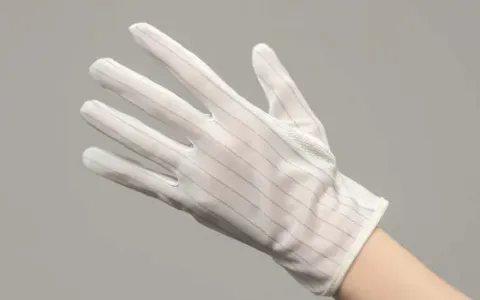
- Electronics assembly: Smocks, gloves, and workstation mats that protect sensitive components.
- Aerospace: Flight deck and avionics assembly apparel that meets strict flammability and ESD standards.
- Medical devices: Cleanroom apparel for implant manufacturing and sterile packaging.
- Data centers: Technician apparel and floor mats to prevent static damage to servers.
We are proud to partner with industry leaders who demand the highest levels of performance and reliability. Our clients include Fortune 500 electronics manufacturers, leading aerospace suppliers, and innovative medical device companies. By collaborating closely with these organizations, we continuously refine our products to meet evolving challenges. For example, our partnership with a top-tier semiconductor fabricator led to the development of a new fabric that combines ultra-low particle shedding with superior ESD performance—a breakthrough that is now benefiting clients worldwide.
FAQ: Expert Answers to Common Questions
Q1: How does your fabric perform after multiple washes?
Our fabrics are tested to withstand at least 100 industrial wash cycles with less than 10% change in surface resistivity. This is achieved through our patented conductive fiber matrix, which is integrated into the fabric structure rather than applied as a coating. We also offer a 5-year performance guarantee under normal use conditions.
Q2: Can your ESD fabric be used in Class 100 cleanrooms?
Absolutely. Our fabrics are designed to meet ISO Class 4 (Class 10) cleanroom standards for particle shedding. We use continuous filament yarns and special finishing processes to minimize particle generation. Each batch is tested for particle release according to IEST-RP-CC003.4.
Q3: What is the typical surface resistivity of your fabric?
Our standard ESD fabrics have a surface resistivity of 10^6 to 10^9 ohms, which falls within the conductive range specified by ANSI/ESD S20.20. We also offer static dissipative fabrics in the 10^9 to 10^12 ohm range for applications requiring slower discharge.
Q4: Do you provide custom sizes and colors?
Yes, we offer full customization, including fabric weight, color, and garment design. Our team can work with you to develop fabrics that meet specific requirements, such as flame retardancy or chemical resistance. Minimum order quantities apply, but we strive to accommodate both large and small orders.
Q5: How do you ensure compliance with international standards?
We test our fabrics to ANSI/ESD S20.20, IEC 61340-5-1, and other relevant standards. Each shipment includes a certificate of compliance with detailed test data. We also maintain ISO 9001 and ISO 14001 certifications for quality and environmental management, ensuring consistent product quality and sustainability.
Conclusion and Call to Action
In the high-stakes world of high-tech manufacturing, static electricity is an invisible enemy that can strike anytime, anywhere. But with the right antistatic ESD fabric, you can turn that vulnerability into a strength. Jiangsu Textile Research Institute Inc. offers more than just fabrics; we deliver peace of mind. Our engineered ESD fabrics provide unmatched durability, humidity independence, and consistency, backed by real-world success stories from industry leaders worldwide. Don’t let static silently erode your yields, your reputation, or your bottom line. Take the first step toward robust ESD protection today. For a comprehensive technical white paper that dives deeper into the science of ESD fabrics and our testing protocols, or to speak with one of our sales engineers about your specific needs, please reach out to us. Your products—and your customers—will thank you.
Related News
Read More >-
![Is Your Lining Really Fire Retardant?]()
Is Your Lining Really Fire Retardant?
1. Introduction: The Hidden Risks of Non-Compliant Linings 2. Industry Pain Points: Flammability, Durability, and Compliance Gaps 3. Solutions: Advanced Fire Retardant Lining Fabrics from Jiangsu Textile Research Institute Inc. 4. Customer Success Stories: Real-World Results 5. Applications and Partnerships: Trusted by Global Leaders 6. FAQ: Answers from Our Engineers 7. Conclusion & Call to Action
-
![Is Your Garment Fabric Yarn Costing You Millions?]()
Is Your Garment Fabric Yarn Costing You Millions?
1. Introduction: The Hidden Costs of Yarn 2. Pain Points: Quality Inconsistency, Supply Chain Disruptions, and Performance Gaps 3. Solutions: Advanced Yarn Engineering and Quality Control 4. Case Studies: Real-World Success Stories 5. Applications and Partnerships: Trusted by Industry Leaders 6. FAQ: Technical Insights for Engineers and Procurement Managers 7. Conclusion: Take Action to Optimize Your Yarn Strategy
-
![Is Your Anti-Bacterial Fabric Really Safe?]()
Is Your Anti-Bacterial Fabric Really Safe?
1. Introduction: The hidden truth behind anti-bacterial fabrics 2. Pain Points: Why conventional anti-bacterial treatments fail - Durability issues - Skin irritation and toxicity - Environmental impact 3. Solutions: Advanced anti-bacterial fabric technologies - Durable silver-ion technology - Non-toxic, skin-safe treatments - Eco-friendly manufacturing 4. Customer Success Stories - Case 1: Healthcare provider in Germany - Case 2: Sportswear brand in the USA - Case 3: Hospitality chain in France - Case 4: Medical textile distributor in Japan 5. Applications and Partnerships - Key application areas - Strategic partnerships 6. FAQ: Engineers and Procurement Managers Ask 7. Conclusion and Call to Action
-
![Can Fire Resistant Fabrics Survive 2000°F?]()
Can Fire Resistant Fabrics Survive 2000°F?
1. Introduction: The 2000°F Challenge 2. Pain Points in High-Temperature Applications 3. Solutions: Engineering Fire Resistant Fabrics for Extreme Heat 4. Customer Success Stories 5. Applications and Partnerships 6. FAQ for Engineers and Procurement Managers 7. Conclusion and Call to Action
-
![Can Antistatic Twill Fabric Cut Downtime?]()
Can Antistatic Twill Fabric Cut Downtime?
1. Introduction: The Hidden Cost of Static in High-Tech Manufacturing 2. Pain Points: ESD Damage, Dust Attraction, and Operator Discomfort 3. The Solution: How Antistatic Twill Fabric Works 4. Customer Success Stories 5. Applications and Partnerships 6. FAQ for Engineers and Procurement Managers 7. Conclusion and Call to Action